

AI-powered contextual research doubles engagement rates compared to traditional cold outreach methods. Yet most B2B tech marketers still rely on volume-focused tactics that yield poor conversions. This guide reveals how integrating AI insights with psychological sequencing transforms cold outreach from generic spam into strategically positioned conversations that drive real business results.
Table of Contents
- Introduction To Cold Outreach In 2026
- How AI Is Transforming Cold Outreach
- Psychological Sequencing: The Key To Engagement
- Common Misconceptions That Hurt Outreach Success
- Framework For Evaluating And Implementing Future Outreach Strategies
- Case Studies And Real-World Applications
- Challenges And Ethical Considerations Moving Forward
- Conclusion And Actionable Next Steps For Marketers
- Explore AI-Powered Cold Outreach With Mailly
Key takeaways
| Point | Details |
|---|---|
| AI contextual analysis | Deep research into company signals enables hyper-personalized outreach that addresses real prospect needs |
| Psychological sequencing | Structuring campaigns to mimic natural relationship building increases conversions by 40% |
| Relevance over volume | Context-driven messages outperform mass email blasts in engagement and response rates |
| Ethical AI practices | Transparent data use builds trust and improves response rates by 65% |
| Framework implementation | Context-Psychology Fit approach aligns campaigns with prospect priorities for measurable ROI |
Introduction to cold outreach in 2026
Cold outreach remains a cornerstone of B2B technology sales, but traditional approaches are failing. Sending thousands of generic emails no longer generates the pipeline growth that marketing and sales leaders need. Response rates continue to decline as prospects become increasingly selective about which messages deserve their attention.
The root problem is simple. Most outreach strategies prioritize quantity over quality, treating every prospect as interchangeable. This volume-based thinking ignores the reality that each company faces unique challenges, operates with distinct priorities, and responds to different value propositions.
AI and advanced analytics are changing this dynamic completely. These technologies enable marketers to conduct deep contextual research before drafting a single message. Instead of blasting generic templates, you can now analyze:
- Product architecture and technical stack signals
- Hiring patterns indicating growth areas or pain points
- Monetization models revealing revenue priorities
- Competitive positioning and market pressures
- Recent company announcements and strategic shifts
This intelligence transforms outreach from interruption to insight. When your message demonstrates genuine understanding of a prospect’s business situation, engagement rates climb dramatically. The future belongs to marketers who embrace B2B cold outreach best practices that prioritize relevance.
Market pressures are accelerating this shift. Decision makers receive hundreds of cold emails weekly, creating fierce competition for attention. Standing out requires more than catchy subject lines. You need a cold outreach contextual strategy that proves you’ve done your homework.
Psychological sequencing adds another critical dimension. Rather than hitting prospects with aggressive sales pitches, smart marketers structure campaigns to build trust progressively. This approach mirrors how relationships develop naturally, making prospects more receptive to your eventual offer. B2B cold outreach tips for SaaS teams emphasize this patient, strategic approach.
How AI is transforming cold outreach
AI technologies fundamentally change how you research and engage prospects. Traditional outreach relies on basic firmographic data like company size and industry. AI digs exponentially deeper, analyzing dozens of business signals to create a comprehensive picture of each prospect’s current situation.
Consider what AI can evaluate before you write a single word. It examines product architecture to understand technical complexity and integration challenges. It tracks hiring patterns to identify expanding teams or new strategic initiatives. It analyzes monetization approaches to determine whether prospects prioritize growth, profitability, or market share.
Competitive landscape analysis adds another layer. AI identifies which competitors prospects monitor, what alternatives they’ve considered, and where gaps exist in their current solutions. This intelligence lets you position your offer against the specific options prospects are actually evaluating.
The performance improvements are substantial. Using AI-powered contextual research doubles engagement rates compared to traditional methods. Reply rates increase by 15-20% on average. More importantly, the quality of responses improves because prospects recognize genuine relevance rather than generic pitches.
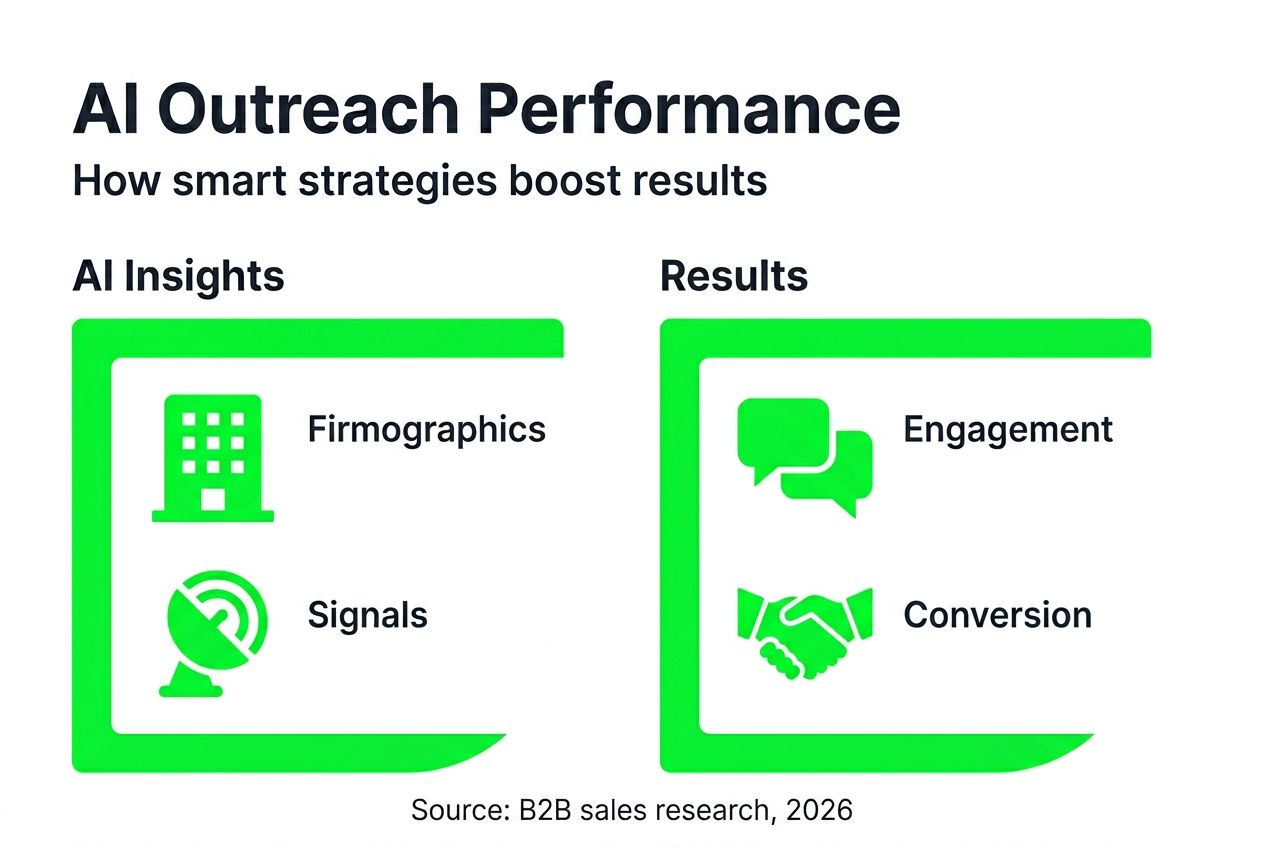
AI for cold outreach B2B applications extend beyond initial research. These tools continuously optimize campaigns by analyzing which messages generate responses, which timing works best, and which value propositions resonate with different prospect segments. This creates a feedback loop that makes each campaign smarter than the last.
Practical implementation involves several key steps:
- Feed AI systems with CRM data, past campaign results, and ideal customer profiles
- Let algorithms identify patterns in successful engagements
- Generate prospect-specific insights highlighting relevant pain points
- Craft messages that connect your solution to identified challenges
- Monitor performance metrics to refine targeting and messaging
The shift from bulk outreach to precision campaigns represents a fundamental mindset change. You’re no longer playing a numbers game where success comes from maximizing volume. Instead, you’re focusing resources on prospects where genuine fit exists and crafting messages that prove you understand their world.
Data-driven cold outreach success stories consistently show higher conversion rates with smaller prospect lists. Quality targeting beats quantity every time. The personalized B2B outreach benefits extend beyond immediate response rates to include stronger pipeline quality and faster sales cycles.
Pro Tip: Start with a small segment of high-value prospects to test AI-driven approaches. Measure engagement improvements before scaling to larger lists. This controlled rollout helps you refine messaging frameworks while building internal confidence in the new methodology.
Psychological sequencing: the key to engagement
Psychological sequencing structures your email campaigns to mirror how trust develops in human relationships. Rather than immediately pitching your solution, you guide prospects through stages that build familiarity, demonstrate expertise, and establish credibility before making an ask.

The first touchpoint focuses purely on providing value. Share a relevant insight, industry trend, or specific observation about the prospect’s business. This positions you as someone who pays attention and understands their context. No sales pitch, no product mention, just genuine helpfulness.
Subsequent messages deepen the relationship progressively. You might share a case study from a similar company, offer a framework for solving a challenge you know they face, or provide data that helps them make better decisions. Each interaction reinforces that you’re a valuable resource, not just another vendor.
The psychological impact is powerful. Sequenced campaigns can increase conversion rates by approximately 40% compared to single-blast approaches. Prospects who receive carefully timed, progressively valuable messages are far more likely to engage when you finally present your solution.
Reduced unsubscribe rates by about 30% demonstrate another benefit. When emails consistently deliver value rather than aggressive sales pitches, prospects keep reading. They may not be ready to buy immediately, but they appreciate the content and stay engaged for future opportunities.
Designing effective sequences requires understanding your prospect’s likely mindset at each stage:
- Awareness: They don’t know you exist yet. Focus on grabbing attention with genuine insight.
- Interest: They’ve engaged once. Provide deeper value that reinforces your expertise.
- Consideration: They’re evaluating options. Show specific results and differentiation.
- Decision: They’re ready to move forward. Make the next steps clear and friction-free.
Timing matters as much as content. Space messages appropriately to avoid overwhelming prospects while maintaining momentum. Most successful sequences use 3-5 day intervals in early stages, extending to weekly touchpoints as the relationship matures.
Pro Tip: Map your sequence to the prospect’s likely decision-making process, not your sales cycle. If prospects typically evaluate solutions for 6 weeks, design a sequence that provides value throughout that timeframe rather than rushing to close in 2 weeks.
Common misconceptions that hurt outreach success
Many marketers sabotage their own campaigns by clinging to outdated beliefs about what drives outreach success. These misconceptions waste resources and damage brand reputation with prospects who could have been valuable customers.
The volume myth tops the list. Sales leaders often assume that sending more emails automatically generates more responses. In reality, more outreach volume does not equate to better results and can harm conversion rates. Beyond a certain threshold, additional volume triggers spam filters, annoys prospects, and dilutes your team’s focus from quality research.
Generic templates represent another costly mistake. While templates save time, using the same boilerplate message for every prospect guarantees poor results. Prospects instantly recognize mass-mailed content and delete it without reading. Bounce rates increase as email providers flag repetitive messages as spam.
Superficial personalization creates false confidence. Adding a prospect’s name and company to an otherwise generic message doesn’t constitute real personalization. True personalization requires aligning your message with the prospect’s current business context, challenges, and priorities. This means referencing specific signals like recent hires, product launches, or market positioning.
The “more features, more interest” fallacy leads to bloated, unfocused messages. Listing every capability your product offers overwhelms prospects and obscures the specific value relevant to them. Effective outreach identifies the one or two capabilities that address their most pressing needs right now.
“The biggest mistake in cold outreach is treating all prospects the same. Context-aware messaging that demonstrates understanding of specific business situations outperforms generic approaches by orders of magnitude.”
Ignoring common cold outreach mistakes means learning expensive lessons repeatedly. Smart marketers study failure patterns, identify what doesn’t work, and adjust their approach accordingly. This includes recognizing when prospects aren’t a good fit rather than forcing conversations that won’t convert.
The quick-win obsession pushes teams to prioritize immediate responses over relationship building. While fast conversions are appealing, many high-value deals require longer nurture periods. Abandoning prospects who don’t respond to the first few emails wastes the investment in identifying and researching them.
Framework for evaluating and implementing future outreach strategies
The Context-Psychology Fit Framework provides a systematic approach for integrating AI insights with behavioral principles. This methodology helps you evaluate whether your outreach strategy aligns with both prospect context and psychological readiness to engage.
At its core, the framework asks two critical questions. First, does your message demonstrate genuine understanding of the prospect’s current business situation? Second, does your campaign structure respect the natural progression of how trust and interest develop? When both answers are yes, engagement rates climb significantly.
60% of B2B marketing leaders use the Context-Psychology Fit Framework to optimize outreach. The adoption rate reflects proven results across diverse industries and company sizes. Leaders implementing this approach report measurably better pipeline quality and conversion rates.
Comparing generic versus AI-powered approaches reveals stark differences:
| Metric | Generic Outreach | AI-Powered Personalized |
|---|---|---|
| Reply Rate | 2-4% | 8-12% |
| Meeting Conversion | 10-15% | 35-45% |
| Sales Cycle Length | 90-120 days | 60-80 days |
| Lead Quality Score | 3.2/10 | 7.8/10 |
Implementing the framework involves several key evaluation factors:
- Lead qualification depth: How thoroughly have you researched each prospect’s fit?
- Contextual relevance: Does your message address their specific situation and priorities?
- Psychological stage: Where is the prospect in their buyer journey?
- Value demonstration: Have you proven understanding before making asks?
- Sequence design: Does your campaign build trust progressively?
A stepwise implementation approach minimizes disruption while building momentum:
- Audit current outreach to identify gaps in context or psychological alignment
- Implement AI research tools to gather deeper prospect intelligence
- Design message templates that incorporate contextual insights naturally
- Structure campaigns using psychological sequencing principles
- Measure performance against traditional approaches to quantify improvement
- Scale successful patterns while continuously refining based on results
Tracking the right cold outreach performance metrics ensures you can measure framework effectiveness objectively. Focus on reply rates, meeting conversion percentages, sales cycle duration, and ultimate deal closure rates rather than vanity metrics like total emails sent.
Pro Tip: Balance automated data gathering with human insight. AI excels at pattern recognition and signal analysis, but experienced marketers add nuance about why certain messages resonate emotionally. The most effective campaigns blend algorithmic intelligence with human creativity.
Case studies and real-world applications
Real-world implementations demonstrate how combining AI research with psychological sequencing delivers measurable business impact. These examples come from B2B technology companies that transformed their outreach approach and tracked results carefully.
A mid-market SaaS company doubled engagement rates by implementing AI contextual research. Previously, their sales team sent templated emails based solely on company size and industry. After adopting AI-powered analysis, they researched each prospect’s technology stack, recent hires, and competitive positioning. Messages referenced specific signals like recent engineering hires suggesting new product development. Reply rates jumped from 4% to 9% within 60 days.
Another organization improved lead qualification by 22% through detailed hiring signal analysis. Their AI system monitored when prospects hired roles indicating specific pain points. For example, new customer success manager positions signaled potential churn issues, while data engineer hires suggested analytics infrastructure needs. Tailoring messages to address these implied challenges resulted in higher-quality conversations and faster deal progression.
A B2B sales technology provider reduced sales cycles by 30% using psychologically sequenced follow-ups. Rather than immediately pitching product features, they designed a five-touch sequence that built value progressively. The first email shared industry benchmarking data. The second offered a framework for evaluating solutions. The third presented a relevant case study. Only the fourth mentioned their product explicitly. This patient approach shortened time-to-close from 105 to 73 days on average.
Key lessons from successful implementations include:
- Start with high-value prospect segments to prove ROI before scaling
- Invest time in gathering quality contextual data rather than rushing to send emails
- Design sequences around prospect decision timelines, not your sales goals
- Test different psychological approaches with small cohorts before committing to one framework
- Continuously refine based on which messages and sequences generate the best engagement
These companies also reported unexpected benefits beyond immediate metrics. Sales teams felt more confident approaching prospects because they had genuine insights to share. Prospects perceived them as strategic advisors rather than pushy vendors. Win rates improved even for deals with longer sales cycles because the initial relationship foundation was stronger.
Challenges and ethical considerations moving forward
Advanced AI capabilities create new responsibilities for marketers regarding data ethics, privacy, and transparency. How you gather and use prospect information directly impacts brand reputation and long-term relationship potential.
Ethical AI usage differentiates trustworthy brands from those prospects avoid. When you clearly communicate how you obtained information about a prospect and what you’ll do with data they share, response rates improve. Transparency builds confidence that you’ll handle their business information responsibly throughout the sales process and beyond.
Key privacy concerns center on data source legitimacy and consent. Scraping information from sources where prospects had no expectation of business use crosses ethical lines. Legitimate data comes from public business profiles, company websites, press releases, and databases where businesses have agreed to inclusion. Using personal social media posts or private information feels invasive and damages trust.
Balancing automation efficiency with human oversight prevents algorithmic mistakes that could embarrass your brand. AI might misinterpret signals or generate messages that, while technically accurate, feel tone-deaf to human readers. Having marketers review AI-generated insights and messages before sending catches these issues before they reach prospects.
65% of prospects prefer brands that respect data privacy and use AI ethically in outreach. This preference directly impacts response rates and willingness to engage in substantive conversations. Brands that prominently communicate their ethical AI practices report better long-term engagement and higher customer lifetime values.
Regulatory trends are tightening requirements around business data usage. GDPR in Europe, CCPA in California, and emerging regulations in other jurisdictions establish clear rules about data collection, storage, and use. Violations carry substantial penalties, but more importantly, they destroy the trust necessary for successful B2B relationships.
Practical steps for maintaining ethical standards include:
- Audit data sources to ensure legitimacy and appropriate consent
- Provide clear opt-out mechanisms in every communication
- Store prospect data securely with appropriate access controls
- Train sales teams on ethical engagement practices
- Regularly review AI-generated content for potential bias or insensitivity
“Ethics in AI-powered outreach isn’t just about compliance. It’s about building the kind of reputation that makes prospects want to engage with you rather than competitors. The short-term efficiency gains from cutting ethical corners never justify the long-term brand damage.”
The competitive advantage of ethical practices grows stronger as prospects become more sophisticated about evaluating vendors. They research how companies treat data, whether they respect boundaries, and if they demonstrate genuine concern for customer interests. Your outreach approach signals your values before prospects ever speak with your team.
Conclusion and actionable next steps for marketers
The future of cold outreach belongs to marketers who embrace AI-powered contextual research and psychological sequencing over outdated volume-focused tactics. Success in 2026 requires understanding each prospect’s unique business situation and structuring campaigns that build trust progressively.
Implement these strategic recommendations immediately:
- Adopt AI tools that analyze product architecture, hiring patterns, monetization models, and competitive positioning to generate deep prospect insights
- Design email sequences that mirror natural relationship development rather than aggressive sales pitches
- Prioritize message relevance by connecting your solution to specific challenges identified through contextual research
- Implement the Context-Psychology Fit Framework to systematically evaluate and improve campaign effectiveness
- Establish clear ethical guidelines for data usage and AI application to build prospect trust
- Measure success through quality metrics like reply rates and conversion percentages rather than volume metrics
- Continuously optimize based on performance data, refining which approaches generate the best engagement
The gap between AI-powered, psychologically sequenced outreach and traditional mass-email approaches will only widen. Early adopters gain competitive advantages that compound over time as they refine their methodologies and build stronger prospect relationships. Start small, prove results with high-value segments, then scale what works across your entire outbound motion.
Explore AI-powered cold outreach with Mailly
Ready to transform your outbound strategy from generic templates to contextually intelligent campaigns? Mailly offers an AI-powered outbound strategy engine designed specifically for B2B tech companies seeking higher engagement and conversion rates.
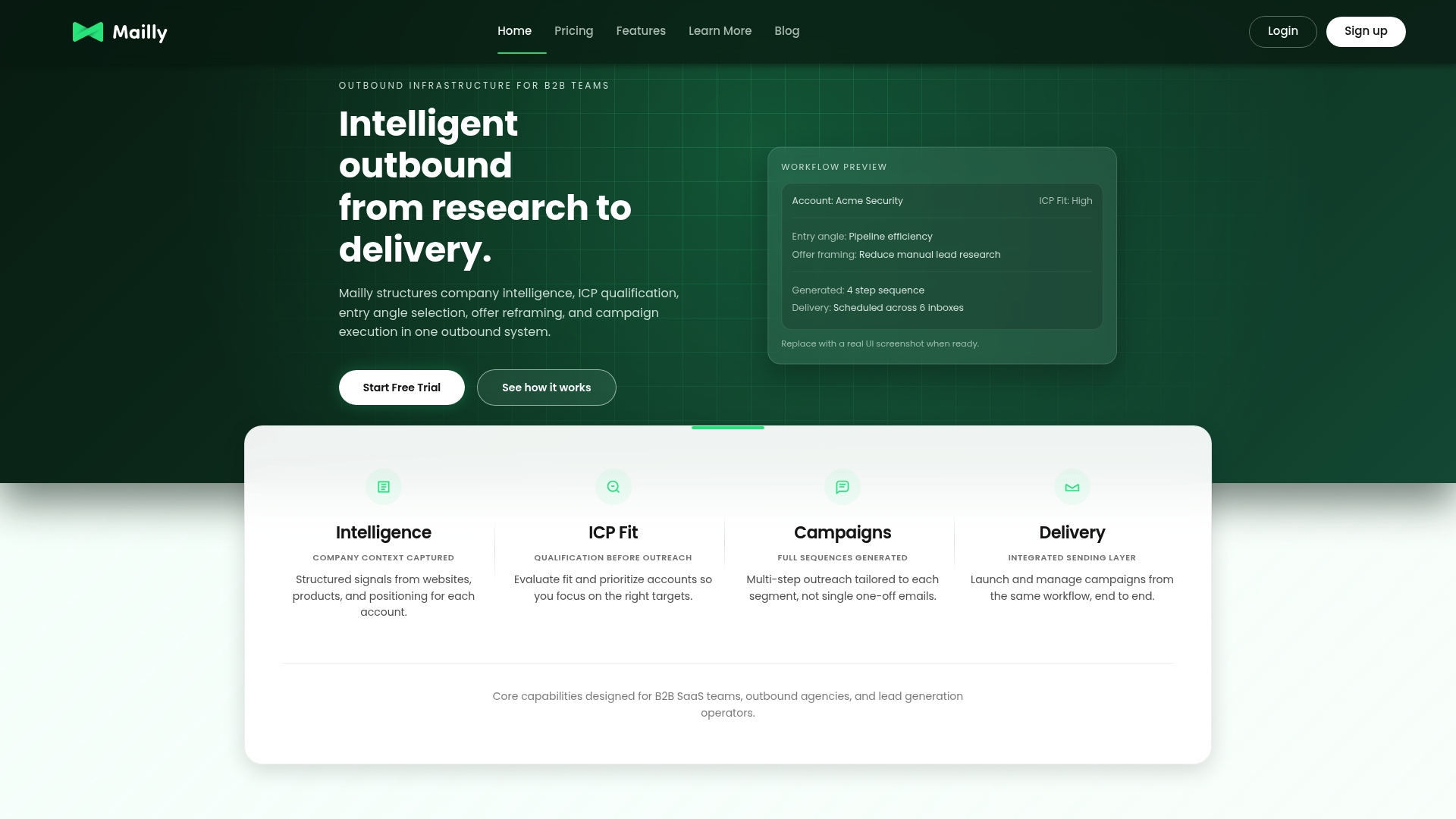
Mailly begins with deep contextual research, analyzing your prospects’ positioning, product architecture, monetization models, hiring signals, and competitive landscape. This intelligence identifies real business bottlenecks and ICP fit before drafting a single email. The platform then builds psychologically sequenced campaigns that feel intentional and strategically positioned rather than templated or random.
Trusted by B2B marketing and sales leaders, Mailly streamlines the entire outbound workflow from prospect research through campaign optimization. The result is outreach that recipients actually want to read because it demonstrates genuine understanding of their business priorities. Discover how AI-driven contextual strategy can double your engagement rates and shorten sales cycles.
FAQ
What is the role of AI in cold outreach for 2026?
AI analyzes multiple business signals including product architecture, hiring patterns, monetization approaches, and competitive positioning to tailor outreach messages. It drives significant improvements in reply and conversion rates by replacing generic approaches with contextually relevant communications that address specific prospect needs.
How does psychological sequencing improve cold email campaigns?
Psychological sequencing structures messages to mimic natural relationship development by building trust and empathy over time. This approach leads to approximately 40% higher conversion rates and 30% lower unsubscribe rates compared to aggressive, single-touch sales pitches.
Why is personalization more than just inserting a prospect’s name?
Effective personalization involves using AI insights to tailor messages to company-specific needs, current business signals, and unique challenges. This deep contextual approach yields significantly higher engagement compared to generic templates with superficial name insertion, because it demonstrates genuine understanding rather than automated customization.
What ethical considerations should marketers keep in mind when using AI for outreach?
Ethical AI usage improves brand reputation and prospect response rates substantially. 65% of prospects prefer brands that respect data privacy and use AI ethically in outreach. Marketers must prioritize transparency about data sources, obtain appropriate consent, provide clear opt-out mechanisms, and maintain secure data handling practices to build the trust necessary for successful B2B relationships.
