

Personalized outreach emails deliver 14.5% higher open rates and 10% higher response rates compared to generic outreach in B2B sales contexts. Yet most tech startups still struggle with generic messaging that fails to resonate with buyers. True personalization goes far beyond inserting a prospect’s name into an email template. It requires deep contextual understanding of their business challenges, priorities, and current situation. This article reveals why personalization drives engagement and teaches you how to implement effective strategies that transform cold outreach from ignored noise into valued conversations.
Table of Contents
- Understanding What ‘Personalization’ Truly Means In B2B Outreach
- Mechanisms Behind Personalization’s Effectiveness In B2B Cold Outreach
- Data And Frameworks For Building Effective Personalized Campaigns
- Common Misconceptions And Pitfalls In B2B Outreach Personalization
- Case Studies: Success Stories Of Personalized Outreach In Tech Startups
- Implementing Personalized Outreach: Practical Steps For Tech Startups
- Conclusion: Transforming Outreach By Making It Intentional And Relevant
- Boost Your B2B Outreach With Our AI-Powered Solutions
Key Takeaways
| Point | Details |
|---|---|
| Deep personalization boosts engagement | Contextual relevance increases buyer engagement by 60% and builds trust faster. |
| Avoid superficial tactics | 72% of marketers over rely on name insertion, missing true contextual opportunities. |
| Use data frameworks systematically | Firmographic, technographic, event driven, and psychological signals guide effective personalization. |
| Balance quality with volume | Generic mass outreach damages brand trust and reduces lead quality significantly. |
| AI enables scalable personalization | Automation tools help maintain message relevance while reaching more prospects efficiently. |
Understanding What ‘Personalization’ Truly Means in B2B Outreach
Most marketers confuse personalization with simple token replacement. They insert a prospect’s first name or company name into a template and call it personalized. This superficial approach is exactly what 72% of marketers do wrong, and it leads to disengagement rather than connection.
True personalization requires deep context about a prospect’s business situation. You need to understand their industry dynamics, current challenges, and strategic priorities. This means analyzing signals like recent hiring patterns, product launches, competitive positioning, and market pressures. When you demonstrate this level of understanding, prospects recognize you’ve done real research and aren’t just blasting templates.
Meaningful personalization signals include:
- Recent executive hires indicating strategic shifts or growth priorities
- Technology stack changes revealing modernization efforts or pain points
- Competitive moves suggesting market pressure or opportunity gaps
- Funding rounds showing expansion plans and investment areas
- Product launches highlighting innovation focus and customer needs
When you reference these specific signals in your outreach, prospects see you understand their world. This contextual awareness separates strategic outreach from spam. It transforms your message from an interruption into a relevant conversation starter that respects their time and intelligence.
Mechanisms Behind Personalization’s Effectiveness in B2B Cold Outreach
Personalized outreach works because it addresses fundamental psychological needs in business decision making. When prospects see messaging tailored to their specific challenges, they immediately perceive higher relevance and value. Contextual relevance boosts buyer engagement by 60%, dramatically increasing response rates and trust.

Relevance signals that you’ve invested time understanding their business. This investment builds reciprocity and trust right from the first touchpoint. Prospects face constant uncertainty about vendor fit and solution alignment. Personalized messaging reduces this uncertainty by demonstrating you already understand their context and can likely address their needs.
Tailored messaging also shortens sales cycles significantly. When prospects immediately see relevance, they skip the skepticism phase that kills most cold outreach. They move faster toward evaluation because your workflow approach has already answered their first question: does this vendor understand my situation?
Key psychological mechanisms at work:
- Pattern matching where prospects recognize their situation in your message
- Trust building through demonstrated research and understanding
- Risk reduction by showing relevant experience with similar challenges
- Cognitive ease from messages that align with existing mental models
Pro tip: Use empathy driven language that mirrors how prospects describe their challenges internally. When your words match their internal conversations, engagement skyrockets because you’re speaking their language rather than vendor speak.
Data and Frameworks for Building Effective Personalized Campaigns
Effective personalization requires systematic data gathering organized around a clear framework. The four layer personalization model provides structure for collecting and prioritizing the most impactful signals. This framework covers firmographics, technographics, event driven triggers, and psychological insights.
Firmographic data establishes basic fit criteria. Industry, company size, revenue range, and geographic location determine whether a prospect matches your ideal customer profile. These fundamentals filter out poor fits before you invest personalization effort.
Technographic data reveals the prospect’s current technology stack and digital maturity. Understanding what tools they use, how they integrate systems, and where gaps exist helps position your solution effectively. This layer shows whether prospects have the technical foundation to adopt your offering.
Event driven signals indicate timing and urgency. Hiring spikes, funding announcements, product launches, leadership changes, and competitive moves all suggest moments when prospects are open to new solutions. These signals carry the highest intent value.
| Data Layer | Key Signals | Personalization Value |
|---|---|---|
| Firmographic | Industry, size, location, revenue | Establishes basic ICP fit |
| Technographic | Tech stack, integration needs, digital maturity | Shows solution compatibility |
| Event Driven | Hiring, funding, launches, leadership changes | Indicates high intent timing |
| Psychological | Pain points, desired outcomes, decision triggers | Enables message resonance |
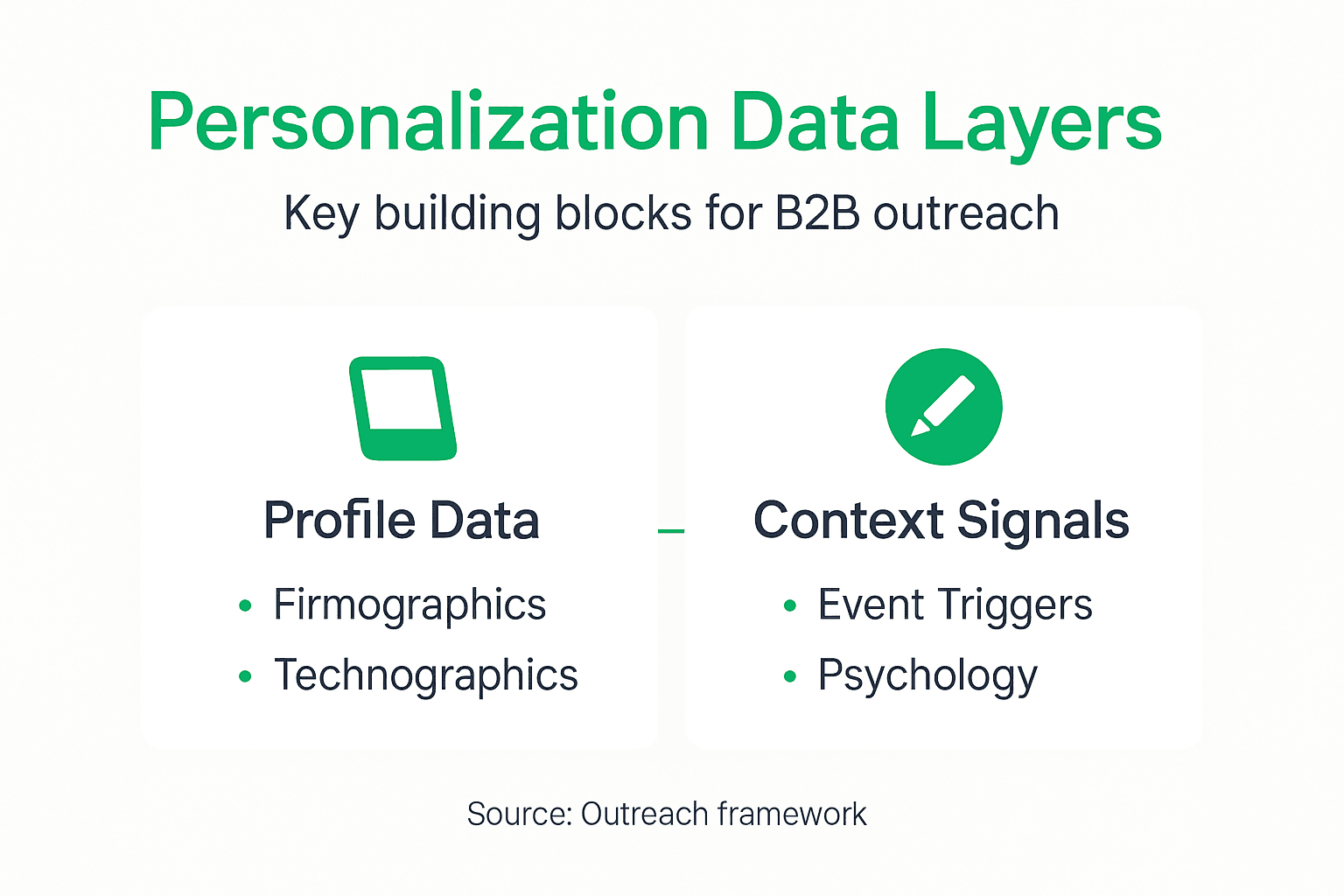
Psychological triggers capture the human dimension. What outcomes do decision makers want? What frustrations keep them searching for solutions? What internal conversations are happening about priorities? This layer transforms data into empathy.
AI tools excel at gathering and analyzing these data layers at scale. They monitor thousands of signals across prospects, identifying patterns and opportunities human teams would miss. This automation makes comprehensive personalization feasible for resource constrained startups.
Pro tip: Prioritize event driven signals first when building campaigns. These indicate prospects are already in motion, making them far more likely to engage than static accounts with no recent activity or change signals.
Common Misconceptions and Pitfalls in B2B Outreach Personalization
The biggest misconception is equating personalization with token insertion. As noted earlier, 72% of marketers fall into this trap, using name and company variables while sending essentially identical messages. This approach fools no one and damages brand perception.
Another critical mistake is prioritizing volume over quality. Many startups blast thousands of generic emails hoping for statistical wins through sheer numbers. This strategy backfires spectacularly. Large volumes of irrelevant outreach train prospects to ignore your brand and damage your sending reputation. Poor targeting also wastes sales team time on unqualified responses.
Neglecting AI and automation creates a different problem. Manual personalization doesn’t scale, forcing teams to choose between quality and reach. This false choice leaves startups either unable to hit pipeline targets or sending low quality outreach that underperforms. Modern AI tools solve this by automating research and message customization.
Common pitfalls to avoid:
- Using personalization tokens without contextual understanding or relevant insights
- Sending high volumes of generic messages that damage brand trust and reputation
- Relying purely on manual processes that can’t scale with growth targets
- Ignoring event driven signals that indicate prospect readiness and intent
- Failing to sequence messages psychologically to build trust over time
The correction requires shifting mindset from quantity to quality. Focus personalization depth on fewer, better fit prospects rather than surface level customization across massive lists. Balance effort through smart automation that maintains message relevance while expanding reach. Allocate resources to deep research on high value accounts rather than spreading effort thin.
Case Studies: Success Stories of Personalized Outreach in Tech Startups
Real world results demonstrate personalization’s impact when implemented correctly. Tech startups using hiring signal based personalization consistently achieve 35% higher reply rates compared to generic outreach. By identifying companies actively hiring for roles related to their solution, these startups reach prospects with immediate, pressing needs.
Competitor insight driven campaigns show even stronger conversion improvements. When outreach references specific competitive pressures or market positioning challenges, conversion rates jump 22% higher. Prospects recognize strategic understanding and engage more seriously with vendors who demonstrate market awareness.
Context driven email sequences deliver the most impressive efficiency gains. Startups implementing psychologically sequenced campaigns based on deep contextual research report 30% shorter sales cycles. These campaigns build trust progressively, addressing objections and demonstrating value at each stage rather than pushing for premature closes.
| Personalization Approach | Key Metric | Improvement |
|---|---|---|
| Hiring signal targeting | Reply rate | 35% increase |
| Competitor insight messaging | Conversion rate | 22% increase |
| Context driven sequencing | Sales cycle length | 30% reduction |
| Event triggered outreach | Meeting book rate | 40% increase |
These metrics highlight tangible benefits across the entire funnel. Personalization improves top of funnel engagement through higher open and reply rates. It accelerates mid funnel progression with better qualified conversations. It shortens bottom of funnel cycles by building trust faster and addressing concerns proactively.
The common thread across successful implementations is depth over breadth. Winners focus personalization effort on accounts with strong fit signals and clear intent indicators. They invest research time upfront to understand context deeply, then craft messaging that demonstrates this understanding. The result is outreach that prospects actually want to receive and respond to.
Implementing Personalized Outreach: Practical Steps for Tech Startups
Starting effective personalized outreach requires a systematic approach. Follow these sequenced steps to build scalable campaigns that maintain quality while expanding reach.
Conduct deep contextual research on your ideal customer profile using hiring trends, technology adoption patterns, and competitive positioning. Identify the specific business challenges and strategic priorities common across your best fit prospects.
Tailor core messaging around identified pain points and desired outcomes. Develop message frameworks that address these challenges directly, using language and examples that demonstrate understanding. Reference specific signals that indicate relevance.
Deploy AI powered tools to automate research and scale personalization without sacrificing quality. Modern platforms analyze thousands of data points per prospect, identifying the most relevant signals and suggesting personalization angles.
Sequence emails psychologically to build trust progressively. Start with value driven education, progress to relevant case studies, then move toward solution discussions. Each message should advance the relationship naturally based on proven workflows.
Measure and optimize based on engagement metrics. Track which personalization signals drive highest response rates. Refine messaging based on what resonates. Scale what works and eliminate what doesn’t.
Integrate feedback loops where sales teams share insights from conversations back to marketing. This closes the loop between outreach effectiveness and real prospect needs, continuously improving personalization accuracy.
Pro tip: Start with a tightly focused ICP subset rather than your entire addressable market. Perfect your personalization approach on 100 ideal accounts before expanding. This focused strategy maximizes early wins, builds confidence, and creates proven frameworks to scale.
The key is balancing automation with authenticity. Use technology to handle research and signal identification at scale. Apply human insight to craft messaging that feels genuine and strategically positioned. This combination delivers both efficiency and effectiveness.
Conclusion: Transforming Outreach by Making It Intentional and Relevant
Personalization fundamentally transforms B2B outreach from interruptive spam into valued conversations. The data proves this conclusively, with personalized approaches delivering 14.5% higher open rates, 60% better engagement, and significantly shorter sales cycles. These improvements compound across your pipeline, dramatically impacting revenue growth.
The path forward requires rejecting superficial tactics in favor of deep contextual understanding. Avoid the trap of token based personalization that 72% of marketers fall into. Instead, invest in frameworks that systematically gather and apply firmographic, technographic, event driven, and psychological signals.
Modern AI tools make this level of personalization scalable for resource constrained startups. You no longer face the false choice between quality and volume. Thoughtful automation maintains message relevance while expanding reach, letting small teams compete effectively against larger competitors.
Intentional, contextually relevant outreach transforms not just response rates but the entire buyer experience. Prospects appreciate vendors who respect their time by demonstrating genuine understanding. This respect builds the foundation for long term relationships that extend far beyond initial deals.
Boost Your B2B Outreach with Our AI-Powered Solutions
Ready to implement the personalization strategies you’ve learned? Our platform automates the deep contextual research and message customization that drives real results. We analyze positioning, product architecture, hiring signals, and competitive landscape to identify genuine fit and craft relevant campaigns.
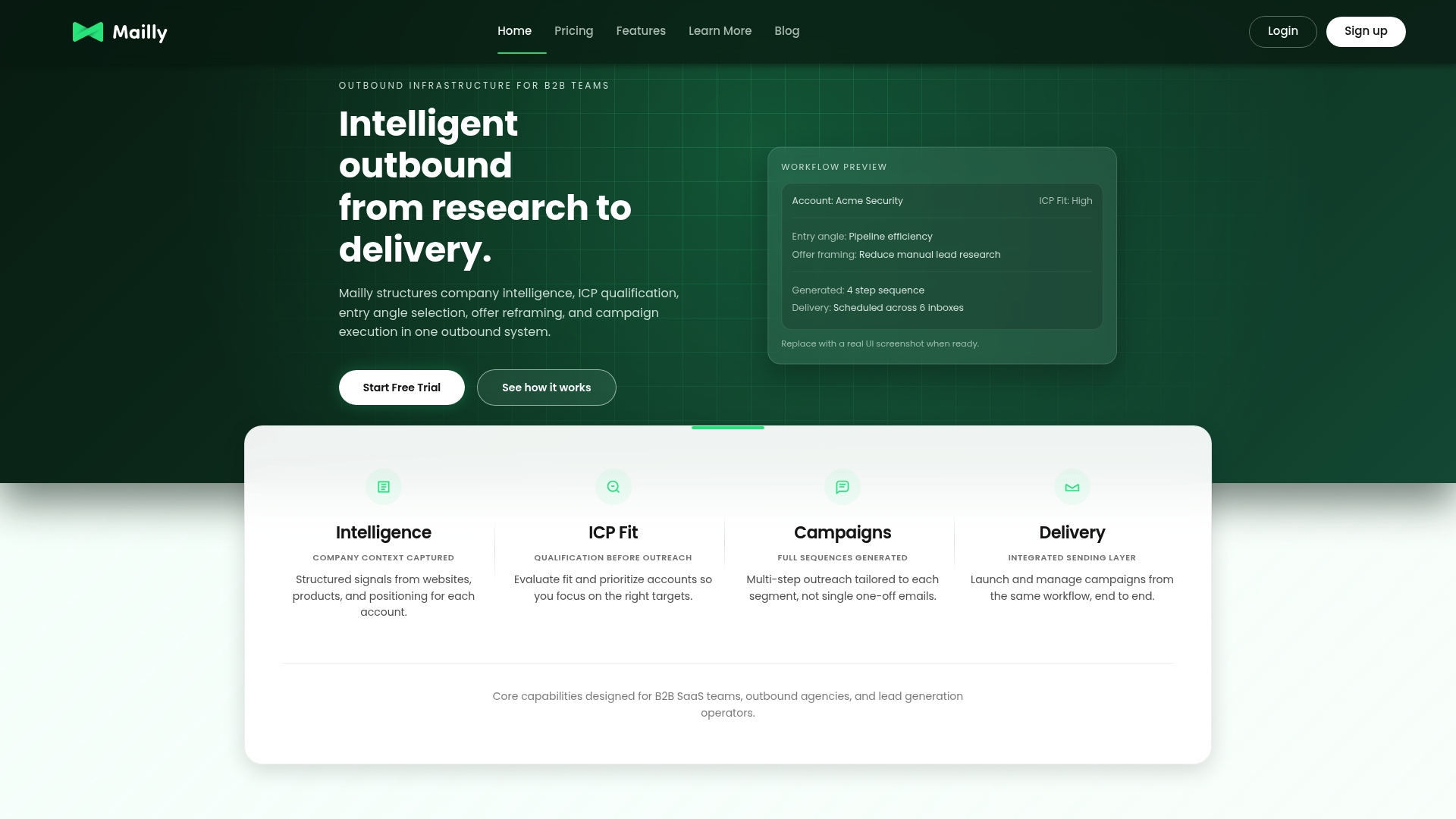
Our AI driven approach transforms how B2B companies execute cold outreach. Instead of starting with templates, we begin with research. We evaluate ICP fit, identify business bottlenecks, and reframe offers around actual priorities. The result is outreach that feels intentional and strategically positioned. Our tools integrate seamlessly into existing workflows, letting you scale personalized campaigns without sacrificing quality or overwhelming your team.
FAQ
What are the key data points to personalize B2B outreach?
Focus on four layers: firmographics like industry and company size, technographics showing current tools and stack, event driven signals such as hiring or funding, and psychological triggers including pain points and desired outcomes. Event driven signals deliver the highest engagement value because they indicate prospects already in motion.
How does AI improve personalization in B2B outreach?
AI analyzes multiple data layers simultaneously across thousands of prospects, identifying patterns and intent signals human teams would miss. It automates message customization based on these insights while maintaining quality standards. This enables startups to scale deeply personalized outreach without proportionally scaling headcount.
What common mistakes should tech startups avoid when personalizing outreach?
Avoid relying solely on name or company token insertion without deeper context. Don’t send high volumes of generic messages that damage brand reputation and trust. Manual personalization that can’t scale creates bottlenecks. Focus instead on deep contextual understanding for fewer, higher fit prospects supported by smart automation.
How can a startup effectively start personalizing outreach without large resources?
Begin with intensive research on a small, high value ICP segment of 50 to 100 accounts. Perfect your approach on this focused group to maximize early wins and build proven frameworks. Then leverage affordable AI tools to gradually scale personalization as you grow, applying lessons learned to broader audiences.
