

Cold email campaigns often fall flat when they overlook the real struggles behind every deal. For B2B SaaS sales managers in North America, matching your outreach to the recipient’s business context and pain points isn’t just smart—it is critical for meaningful engagement. By using quantitative research combined with qualitative insights, you can pinpoint what makes your best prospects tick. This guide shows how a tailored, strategic approach transforms generic emails into relevant conversations that unlock genuine opportunity.
Table of Contents
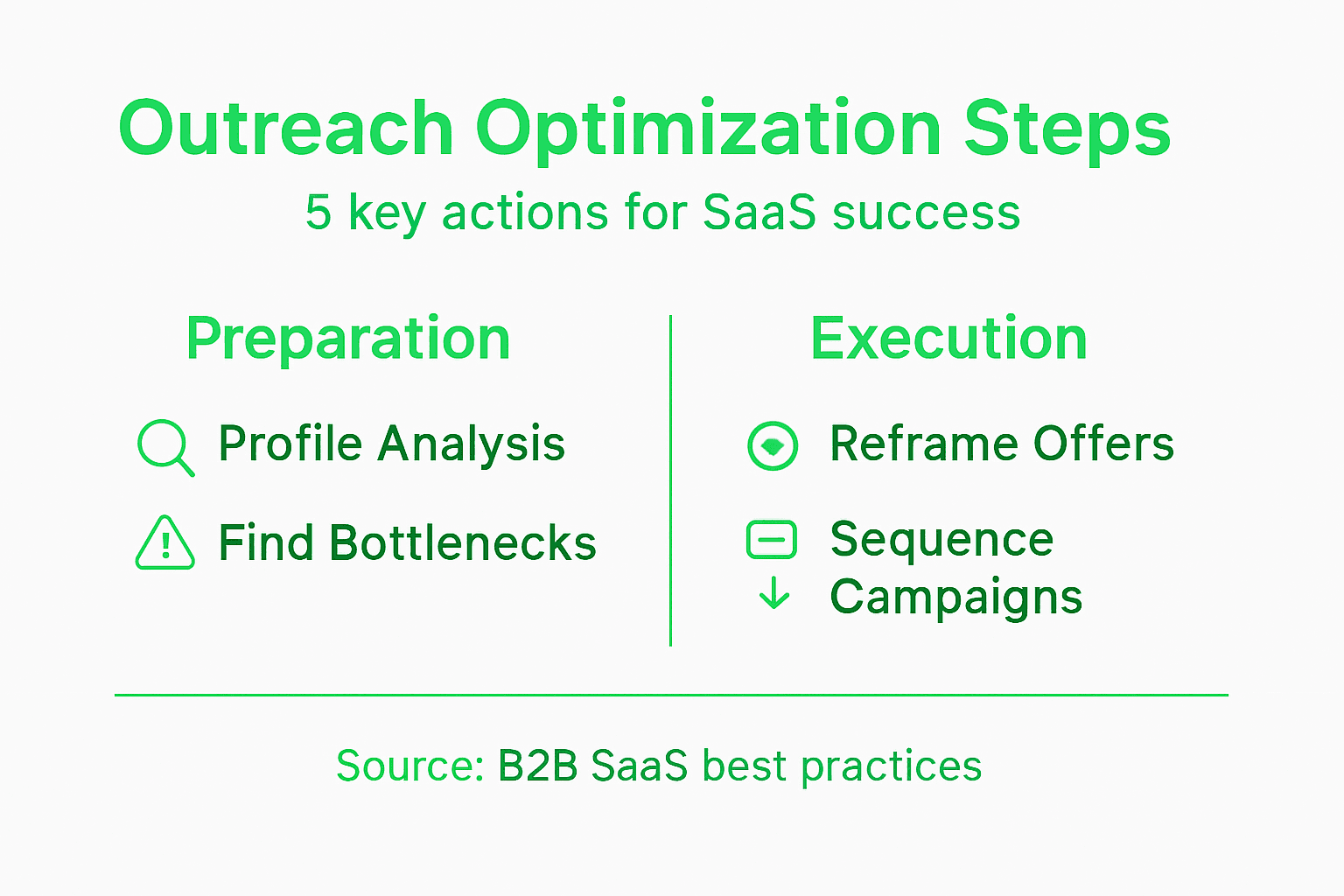
- Step 1: Analyze Ideal Customer Profiles for Context
- Step 2: Identify Key Business Bottlenecks
- Step 3: Reframe Offers to Match Recipient Priorities
- Step 4: Build Psychologically Sequenced Campaigns
- Step 5: Verify and Refine Outreach Effectiveness
Quick Summary
| Key Insight | Explanation |
|---|---|
| 1. Build Dynamic Ideal Customer Profiles | Regularly refine your customer profiles using quantitative and qualitative data for targeted outreach. |
| 2. Diagnose Operational Bottlenecks | Systematically analyze workflows to identify constraints that can hinder growth and efficiency. |
| 3. Tailor Sales Offers to Specific Needs | Customize your value propositions to align with each prospect’s unique challenges and objectives. |
| 4. Develop Psychologically Sequenced Campaigns | Craft communications that resonate emotionally, guiding prospects through their decision-making process. |
| 5. Implement Continuous Outreach Optimization | Analyze performance metrics regularly to refine communication strategies for better engagement and conversion. |
Step 1: Analyze Ideal Customer Profiles for Context
Creating a precise ideal customer profile (ICP) requires strategic data mapping that goes beyond surface-level demographics. Your goal is to build a comprehensive understanding of which companies represent your most valuable potential customers by dissecting their characteristics systematically.
To develop a robust ICP, start by leveraging quantitative data analysis techniques that blend multiple data sources. These typically include:
- CRM historical performance data
- Annual contract value metrics
- Revenue per employee ratios
- Organizational size and industry vertical
- Geographic distribution of high-performing accounts
The process involves examining your existing customer base through a multi-dimensional lens. Quantitative research combined with qualitative insights helps you identify patterns that distinguish your most profitable customers. Research from academic studies demonstrates that using advanced clustering techniques like k-means can unveil nuanced segmentation strategies beyond traditional demographic profiling.
Next, collaborate with your customer success and sales teams to overlay subjective insights onto these quantitative findings. They can provide contextual understanding about why certain companies convert more effectively and remain loyal long-term. This collaborative approach transforms raw data into actionable intelligence for targeted outreach.
Pro tip: Always treat your ICP as a dynamic model that requires continuous refinement, not a static document gathering dust in a corporate folder.
Step 2: Identify Key Business Bottlenecks
Identifying critical business bottlenecks requires a systematic approach that goes beyond surface-level observations. Your objective is to uncover hidden operational constraints that slow down growth, productivity, and revenue generation in your B2B SaaS environment.
Start by analyzing operational workflow interruptions through a comprehensive diagnostic process. Think of your business operations like an assembly line where each process step represents a potential point of friction. Key areas to scrutinize include:
- Sales pipeline conversion rates
- Product development cycle times
- Customer onboarding processes
- Resource allocation and team bandwidth
- Decision-making velocity across departments
Systematic bottleneck detection involves mapping out your entire operational workflow and identifying specific points where momentum stalls. Strategic research from leading consulting firms highlights that many scaling challenges stem from unrecognized operational choke points that limit organizational efficiency.
Bottlenecks are not just obstacles – they are strategic opportunities for transformative process improvement.
To effectively diagnose these constraints, engage cross-functional teams in candid discussions about workflow friction. Encourage team members to share specific instances where processes feel sluggish or unnecessarily complex. This collaborative approach transforms bottleneck identification from a top-down audit into a dynamic, insights-driven exercise.
Pro tip: Implement a quarterly bottleneck review process where teams systematically map and challenge existing operational workflows to prevent systemic performance degradation.
Step 3: Reframe Offers to Match Recipient Priorities
Successfully reframing your sales offer requires a radical departure from traditional pitch strategies. Your mission is to transform generic value propositions into laser-focused solutions that resonate directly with each prospect’s unique business challenges.
Strategic sales transformation demands understanding the nuanced context of your potential customer. This means moving beyond superficial demographics to deeply comprehend their specific operational priorities, pain points, and strategic objectives.
Key dimensions to investigate when reframing your offer include:
- Current organizational challenges
- Specific revenue growth constraints
- Competitive market pressures
- Existing technology infrastructure
- Unique performance bottlenecks
Personalized value mapping requires a multi-dimensional approach. Modern SaaS engagement strategies emphasize anticipating buyer needs through comprehensive data analysis and AI-driven insights. This means reconstructing your standard pitch to speak directly to the prospect’s most pressing business objectives.
Your offer is not about what you sell – it’s about the specific problem you solve for that exact customer.
The art of reframing involves translating your product’s generic features into tailored solutions that address the recipient’s specific context. This requires active listening, deep research, and the ability to articulate value from the customer’s perspective, not your own.

Pro tip: Create a “priority translation guide” that helps your team systematically convert standard product features into customized value propositions for different industry segments and company profiles.
Step 4: Build Psychologically Sequenced Campaigns
Crafting psychologically sequenced campaigns requires a strategic approach that goes beyond traditional email marketing techniques. Your mission is to design a deliberate communication journey that resonates emotionally and intellectually with your target decision makers.
Successful B2B marketing campaigns integrate creative storytelling and emotional intelligence into a carefully orchestrated communication sequence. This means moving beyond generic outreach to create a narrative that speaks directly to your prospect’s deepest professional challenges and aspirations.
Key elements of a psychologically sequenced campaign include:
- Emotional trigger identification
- Progressive value revelation
- Strategic information layering
- Pain point acknowledgment
- Solution positioning
- Trust-building touchpoints
Psychological campaign architecture demands a nuanced understanding of your prospect’s decision-making landscape. This involves mapping out a communication strategy that anticipates and addresses potential psychological barriers, fears, and motivations throughout the buyer’s journey.
Every email is a carefully crafted psychological intervention, not just a message.
The sequencing process requires understanding how different communication elements build upon each other. Start with messages that validate the recipient’s challenges, then progressively introduce your solution as a tailored response to their specific context. Each communication should feel like a natural progression, creating a sense of trust and understanding.
Pro tip: Develop a “psychological trigger map” that documents the emotional and rational progression of your campaign, ensuring each touchpoint serves a strategic psychological purpose.
Step 5: Verify and Refine Outreach Effectiveness
Verifying and refining outreach effectiveness requires a systematic, data-driven approach that transforms raw performance metrics into actionable strategic insights. Your mission is to build a continuous improvement framework that elevates your B2B SaaS communication strategies beyond traditional measurement techniques.
B2B SaaS analytics strategies demand comprehensive tracking across the entire customer journey, moving well beyond simple open and click-through rates. This means mapping performance metrics that illuminate the nuanced progression from initial contact through sustained engagement and conversion.
Critical metrics to monitor include:
- Initial response rates
- Conversion progression
- Pipeline velocity
- Engagement depth
- Customer acquisition cost
- Retention and expansion signals
Performance measurement framework involves implementing a multilayered analysis approach. Strategic data conversion techniques enable you to transform raw interaction data into meaningful insights that drive tactical communication improvements.
Effective outreach optimization is not about perfection – it’s about continuous, incremental refinement.
The refinement process requires discipline and a willingness to experiment. Develop a systematic method for testing different communication approaches, tracking their performance, and rapidly iterating based on empirical results. This means creating controlled experiments that isolate specific variables and measure their impact on overall campaign effectiveness.
Pro tip: Implement a quarterly “outreach forensics” session where your team critically dissects campaign performance, treating each interaction as a learning opportunity for future optimization.
Use this table to link outreach metrics to strategic improvements:
| Metric | What It Reveals | How to Adjust |
|---|---|---|
| Response Rate | Initial interest level | Refine subject lines, timing |
| Engagement Depth | Prospect interaction quality | Personalize messaging content |
| Pipeline Velocity | Speed through sales stages | Remove process bottlenecks |
| Retention Signals | Ongoing customer value | Enhance onboarding, support |
Here’s a summary of how each step transforms your B2B SaaS outreach process:
| Step | Core Focus | Key Outcome | Organizational Benefit |
|---|---|---|---|
| Analyze ICP | Data-driven customer understanding | Clear target customer traits | Higher quality pipeline |
| Identify Bottlenecks | Workflow diagnostics | Uncovered constraints | Faster process improvement |
| Reframe Offers | Tailored value articulation | Offer matches prospect needs | Increased conversion rates |
| Sequence Campaigns | Psychological journey mapping | Engaging communication flow | Greater trust and buy-in |
| Verify & Refine | Data-led iteration | Ongoing campaign optimization | Sustained performance growth |
Unlock True Outreach Relevance with AI-Powered Precision
The challenge of optimizing outreach for B2B SaaS success lies in understanding your ideal customer profile and reframing your offers to match their unique business priorities. This article highlights key pain points such as identifying real business bottlenecks and crafting psychologically sequenced campaigns that cut through the noise. If you are struggling with generic pitches that miss the mark or stagnant conversion rates caused by misaligned communication, you are not alone.
Mailly is designed to solve these exact challenges. By starting with deep contextual research on your prospect’s positioning, product framework, and market signals, Mailly enables you to reframe your message so it resonates with what truly matters to your recipients. The platform builds intelligently sequenced campaigns focused on engagement and trust rather than volume. With Mailly you move away from templated outreach towards a strategy that feels intentional and personalized to your potential customers’ needs.
Experience how AI-powered outbound strategy can transform your sales approach now.
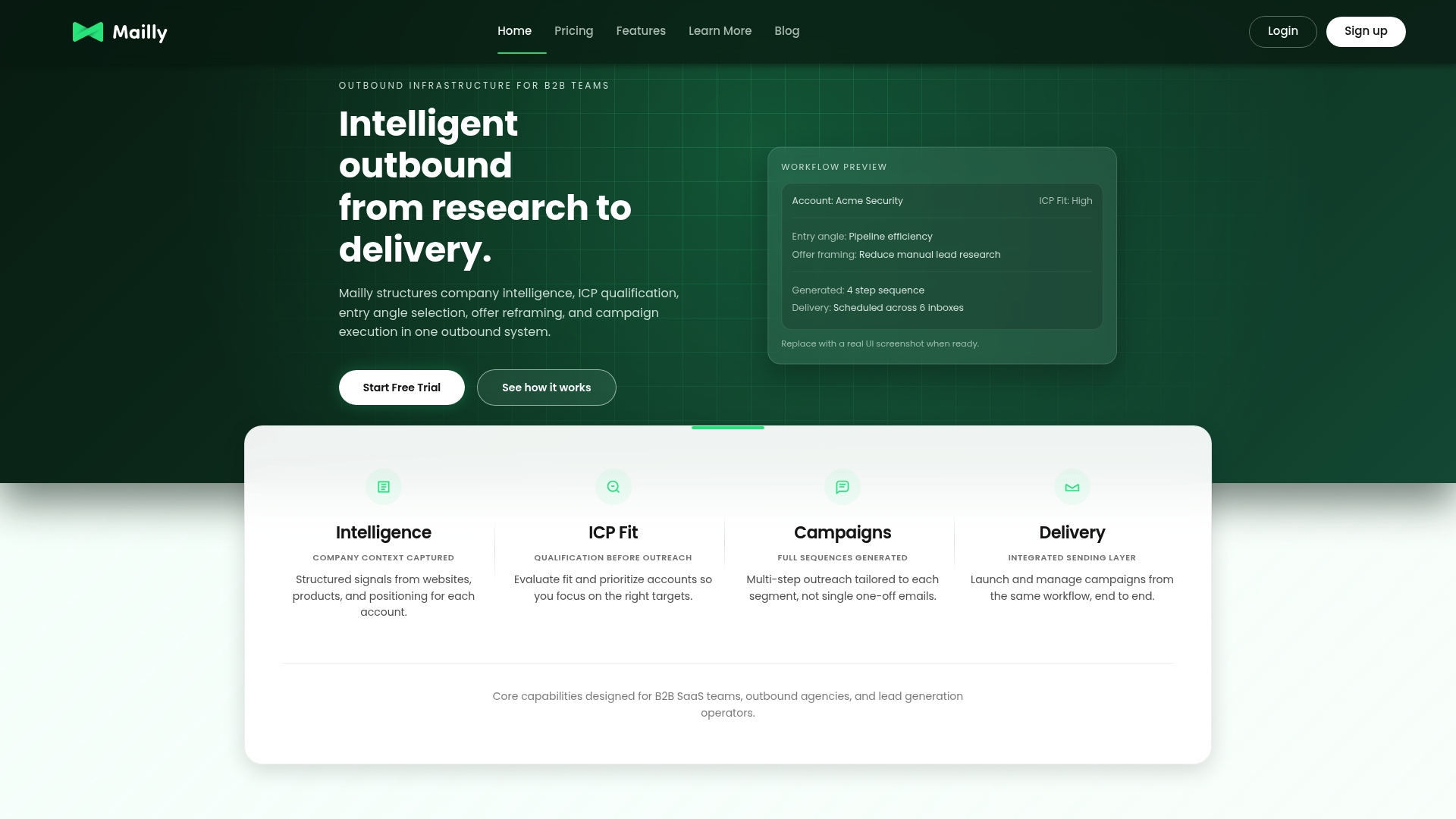
Ready to break through bottlenecks and accelerate your growth? Visit Mailly’s landing page to discover a smarter way to identify ideal customer fits and deliver timely, relevant messaging that drives action. Don’t settle for random outreach. Take control of your sales funnel with actionable insights at every step.
Frequently Asked Questions
How can I effectively analyze my ideal customer profile for outreach?
To analyze your ideal customer profile (ICP), combine quantitative data like historical performance from your CRM with qualitative insights from your sales and customer success teams. Start by creating a comprehensive picture of your top customers’ characteristics and ensure to update this profile regularly to reflect changes in market dynamics.
What are the most common business bottlenecks in a B2B SaaS environment?
Common business bottlenecks in B2B SaaS include slow sales pipeline conversion rates, elongated product development cycles, and ineffective customer onboarding processes. Examine your operational workflow to identify these areas, allowing you to implement strategic changes that can enhance efficiency within 30 days.
How do I reframe my sales offers to align with my prospects’ needs?
To reframe your sales offers, focus on understanding the specific challenges and constraints your prospects face. Customize your value propositions by clearly articulating how your solution directly addresses these needs, which can significantly increase your conversion rates by up to 25%.
What elements should be included in a psychologically sequenced campaign?
Key elements of a psychologically sequenced campaign include recognizing emotional triggers, layering strategic information, addressing pain points, and building trust through consistent communication. Make use of these elements to craft a narrative that resonates with your audience and guides them through their decision-making process.
How can I verify and refine the effectiveness of my outreach efforts?
To verify outreach effectiveness, track key performance metrics such as response rates, conversion progression, and customer acquisition costs. Establish a quarterly review process to analyze these metrics and iteratively refine your strategies, aiming for at least 10% improvement in engagement rates per quarter.
