

Generic emails fill American inboxes but rarely spark action. B2B SaaS founders and sales teams across North America know the pain of low reply rates and wasted hours on manual research. AI-powered cold outreach is turning this challenge into an opportunity by bringing real personalization—based on live company data and behavioral signals—to every conversation. This guide highlights how AI transforms outreach from a numbers game into a relationship-driven process and what it takes to implement these solutions for measurable growth.
Table of Contents
- AI In Cold Outreach: Core Concepts
- Types Of AI-Driven Outreach Solutions
- How AI Personalizes And Automates Messaging
- AI Strategies For ICP Targeting And Context
- Risks, Costs, And Alternatives To AI Outreach
Key Takeaways
| Point | Details |
|---|---|
| AI Enhances Cold Outreach | Artificial Intelligence enables hyper-personalized messaging that significantly improves engagement and conversion rates. |
| Automation and Contextual Intelligence | Advanced AI tools automate research and messaging, leveraging real-time contextual data to craft targeted communications. |
| Potential Risks and Costs | Implementing AI-driven outreach involves risks such as data privacy and high initial investments that require careful assessment. |
| Scalable Solutions | AI outreach solutions can effortlessly scale personalization, providing businesses the ability to connect with thousands of prospects efficiently. |
AI in Cold Outreach: Core Concepts
Cold outreach has traditionally been a numbers game with low conversion rates. Artificial Intelligence is fundamentally transforming this landscape by enabling hyper-personalized, intelligent communication strategies that dramatically improve prospect engagement.
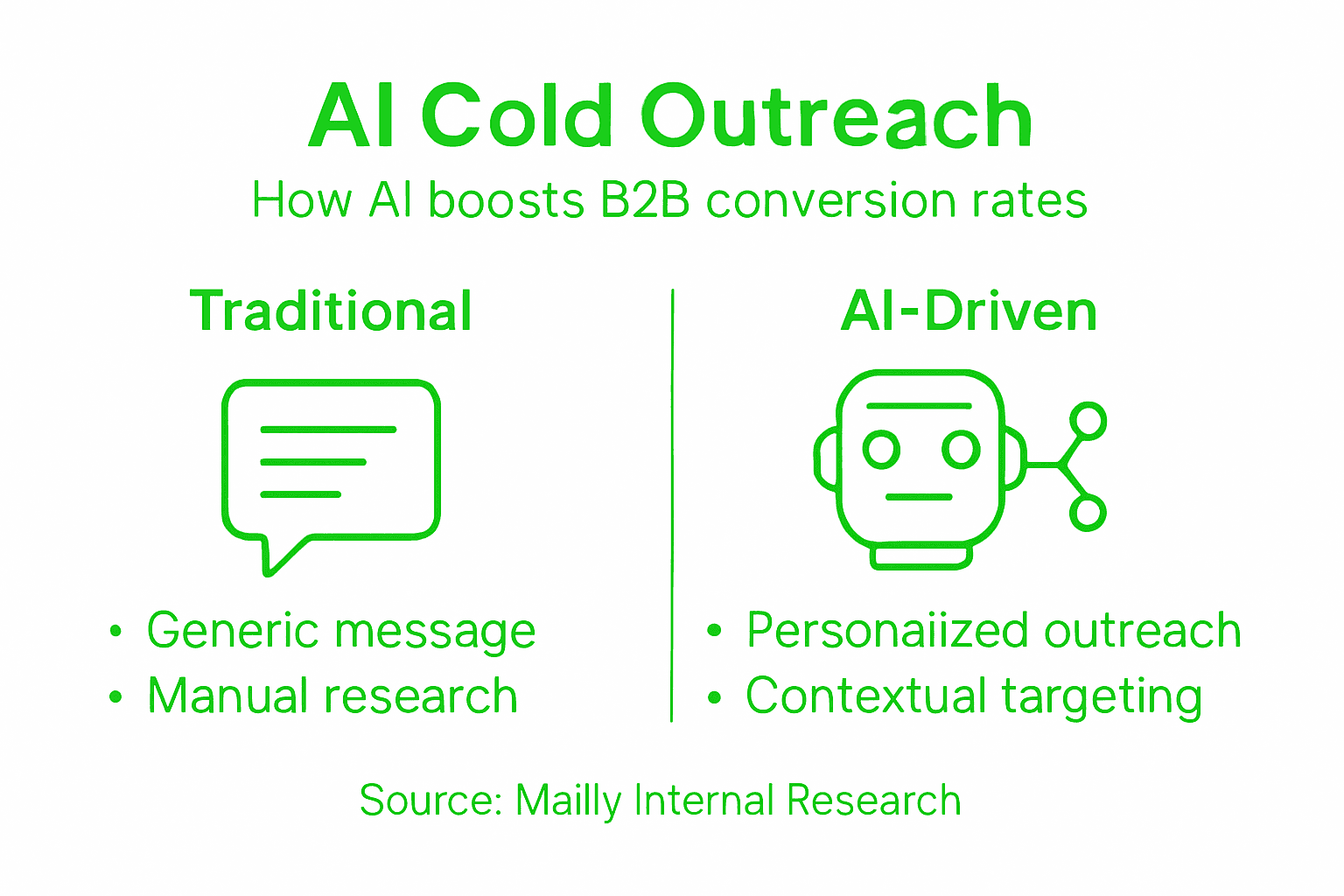
Traditional outreach methods rely on generic, spray-and-pray messaging that gets instantly deleted. By contrast, AI-powered approaches leverage deep contextual research and behavioral signals to craft precisely targeted communications. Advanced AI cold outreach techniques now allow companies to:
- Automatically analyze prospect company data
- Generate unique, role-specific messaging
- Identify high-intent leads through behavioral signals
- Scale personalization without manual research
- Optimize email deliverability and response rates
The core innovation of AI in cold outreach isn’t just automation—it’s intelligent context generation. Modern AI systems can rapidly synthesize information from multiple sources, understanding a company’s positioning, product architecture, hiring signals, and competitive landscape to create genuinely relevant outreach.
This approach moves beyond simple mail merge tactics. Instead of inserting a prospect’s name into a generic template, AI can craft messaging that speaks directly to a company’s specific challenges, recent developments, and strategic priorities.
Key AI Capabilities in Cold Outreach:
- Deep prospect research automation
- Psychologically sequenced email campaigns
- Real-time messaging optimization
- Predictive response probability analysis
Pro tip: Start by auditing your current outreach processes and identifying specific points where AI can provide the most immediate impact on personalization and conversion rates.
To better understand the evolution of cold outreach, see how traditional and AI-driven approaches compare:
| Aspect | Traditional Outreach | AI-Driven Outreach |
|---|---|---|
| Personalization | Generic mass messaging | Deep contextual customization |
| Research Intensity | Manual, time-consuming | Automated, rapid analysis |
| Response Rates | Typically low | Significantly improved |
| Scalability | Limited by human resources | Effortlessly scales to thousands |
| Adaptability | Static templates | Real-time campaign optimization |
Types of AI-Driven Outreach Solutions
Artificial Intelligence is revolutionizing cold outreach by offering diverse solutions that transform traditional communication strategies. AI-powered outreach tools now encompass a range of sophisticated technologies designed to enhance prospect engagement and conversion rates.
The landscape of AI-driven outreach solutions can be categorized into several distinct approaches. B2B outreach strategies typically leverage different AI technologies to address specific communication challenges:
Research and Intelligence Engines
- Automated prospect research platforms
- Competitive landscape analysis tools
- Intent signal detection systems
Personalization Technologies
- Dynamic content generation AI
- Behavioral targeting algorithms
- Contextual messaging optimization
Communication Automation Solutions
- Intelligent email sequencing
- Predictive response prediction
- Multi-channel communication orchestration
Each AI solution brings unique capabilities to the outreach ecosystem. Intelligent research engines can rapidly synthesize complex company data, extracting nuanced insights about potential prospects. These systems go beyond simple data aggregation, using machine learning algorithms to understand organizational dynamics, recent developments, and strategic priorities.
Advanced personalization technologies represent another critical AI-driven solution. These platforms can generate hyper-targeted messaging that feels genuinely individualized, moving far beyond traditional mail merge techniques. By analyzing communication patterns, professional backgrounds, and organizational contexts, AI can craft messages that resonate on a deeper psychological level.
Key Differentiators of AI Outreach Solutions:
- Adaptive learning capabilities
- Real-time contextual understanding
- Scalable personalization
- Predictive engagement modeling
Pro tip: Evaluate AI outreach solutions based on their ability to integrate contextual intelligence, not just automation speed.
How AI Personalizes and Automates Messaging
Artificial Intelligence is transforming cold outreach messaging by introducing unprecedented levels of personalization and efficiency. Automated messaging technologies now enable businesses to craft highly targeted communications that feel individually crafted, despite being generated at remarkable scale.
AI personalization strategies have evolved dramatically, moving far beyond simple mail merge techniques. These advanced systems can dynamically generate unique messages by integrating complex contextual data points:
Contextual Data Integration
- Professional background analysis
- Company historical performance
- Recent organizational changes
- Competitive landscape insights
Psychological Targeting Mechanisms
- Communication style matching
- Emotional trigger identification
- Pain point prediction
- Motivational language optimization
Dynamic Content Generation
- Real-time message adaptation
- Sentiment-aware language generation
- Contextually relevant value propositions
- Intelligent sequencing algorithms
The core breakthrough in AI messaging lies in its ability to understand nuanced human communication patterns. Intelligent language models can now analyze thousands of successful communication interactions, learning subtle linguistic techniques that resonate with specific professional personas.

Advanced AI systems go beyond surface-level personalization. They construct comprehensive psychological profiles, identifying not just demographic data, but deeper motivational triggers that influence professional decision-making. This approach transforms cold outreach from a numbers game into a precision-targeted communication strategy.
Key AI Messaging Capabilities:
- Contextual message generation
- Adaptive communication strategies
- Psychological profile matching
- Automated linguistic optimization
Pro tip: Implement AI messaging solutions that prioritize contextual intelligence over raw automation, focusing on genuine communication quality.
AI Strategies for ICP Targeting and Context
Artificial Intelligence is revolutionizing how businesses identify and engage with their Ideal Customer Profile (ICP), transforming traditional targeting approaches into precision-driven, data-intelligent strategies. Modern AI technologies enable a quantum leap beyond basic demographic segmentation.
AI-powered ICP targeting has evolved into a sophisticated multi-dimensional approach that combines complex data analysis with strategic insights. These advanced systems transcend conventional targeting by integrating multiple contextual signals:
Data Dimension Analysis
- Firmographic profiling
- Technographic matching
- Behavioral intent tracking
- Situational context evaluation
Predictive Qualification Mechanisms
- Machine learning pattern recognition
- Dynamic lead scoring algorithms
- Real-time prospect qualification
- Conversion probability assessment
Contextual Intelligence Layers
- Organizational change detection
- Strategic priority identification
- Competitive landscape mapping
- Communication style optimization
The breakthrough in AI-driven ICP targeting lies in its ability to construct dynamic, living customer profiles that continuously adapt and refine themselves. Unlike static segmentation models, these intelligent systems learn and evolve, capturing nuanced signals that traditional approaches would inevitably miss.
Advanced AI strategies transform ICP targeting from a retrospective analysis into a predictive, forward-looking mechanism. By synthesizing data from multiple sources—including CRM systems, professional networks, and third-party databases—AI can construct comprehensive prospect landscapes that reveal hidden opportunities and potential high-value interactions.
Core ICP Targeting Capabilities:
- Multidimensional prospect analysis
- Continuous profile refinement
- Predictive engagement modeling
- Contextual intelligence integration
Pro tip: Implement AI ICP targeting solutions that prioritize adaptive learning and contextual depth over simplistic demographic filtering.
Risks, Costs, and Alternatives to AI Outreach
Artificial Intelligence in cold outreach represents a powerful yet complex technological frontier with significant potential and inherent challenges. Strategic risk management becomes crucial when implementing AI-driven communication strategies that balance innovation with responsible implementation.
AI implementation risks demand comprehensive evaluation across multiple dimensions. The potential pitfalls extend far beyond simple technological considerations:
Technological Risks
- Data privacy vulnerabilities
- Algorithmic bias potential
- Unintended communication errors
- System reliability challenges
Operational Risks
- Expensive implementation costs
- Required skill development
- Potential messaging inconsistencies
- Integration complexity
Ethical Considerations
- Transparency requirements
- Consent and data usage protocols
- Potential manipulation risks
- Maintaining human oversight
The financial implications of AI outreach solutions are multifaceted. Initial implementation can require substantial investment in technology, training, and ongoing system refinement. Organizations must carefully assess the return on investment, comparing potential efficiency gains against developmental and maintenance expenses.
For a quick overview, here are key cost and risk factors associated with AI outreach strategies:
| Factor | Potential Challenge | Mitigation Strategy |
|---|---|---|
| Initial Investment | High technology expense | Phased rollout, ROI benchmarks |
| Data Privacy | Regulatory compliance risk | Secure storage, data audits |
| Skill Development | Staff training required | Workflow education programs |
| Messaging Quality | Inconsistent AI output | Human review, ongoing testing |
| System Reliability | Downtime impacts outreach | Redundant system architecture |
Alternative approaches exist for businesses hesitant about full AI adoption. Hybrid models that combine AI-assisted research with human-crafted messaging can provide a balanced strategy. These approaches leverage technological capabilities while maintaining the nuanced communication that only human professionals can deliver.
Strategic Outreach Investment Considerations:
- Total cost of technology implementation
- Required organizational skill upgrades
- Potential efficiency improvements
- Long-term scalability potential
Pro tip: Conduct a comprehensive pilot program to assess AI outreach effectiveness before full-scale implementation.
Unlock Precision in B2B Cold Outreach with AI-Powered Personalization
Many businesses struggle with cold outreach that feels generic and fails to connect with ideal customers. This article highlights how AI-driven ICP targeting and contextual intelligence can turn your outreach from a numbers game into a meaningful conversation that truly resonates. Pain points like low response rates, shallow personalization, and time-consuming manual research demand a smarter approach that understands each prospect’s priorities and strategic challenges.
Mailly offers a solution built exactly for these challenges. Instead of starting with templated email copy, Mailly uses deep contextual research to analyze a company’s positioning, hiring signals, and competitive landscape. This lets you automatically identify real bottlenecks and tailor psychologically sequenced campaigns that engage prospects on a deeper level. Experience outreach that is intentional, relevant, and scalable without sacrificing quality.
Ready to transform your B2B cold outreach into a strategic advantage? Discover how our AI-powered outbound strategy engine delivers context-driven personalization and dynamic messaging designed to boost conversion rates.
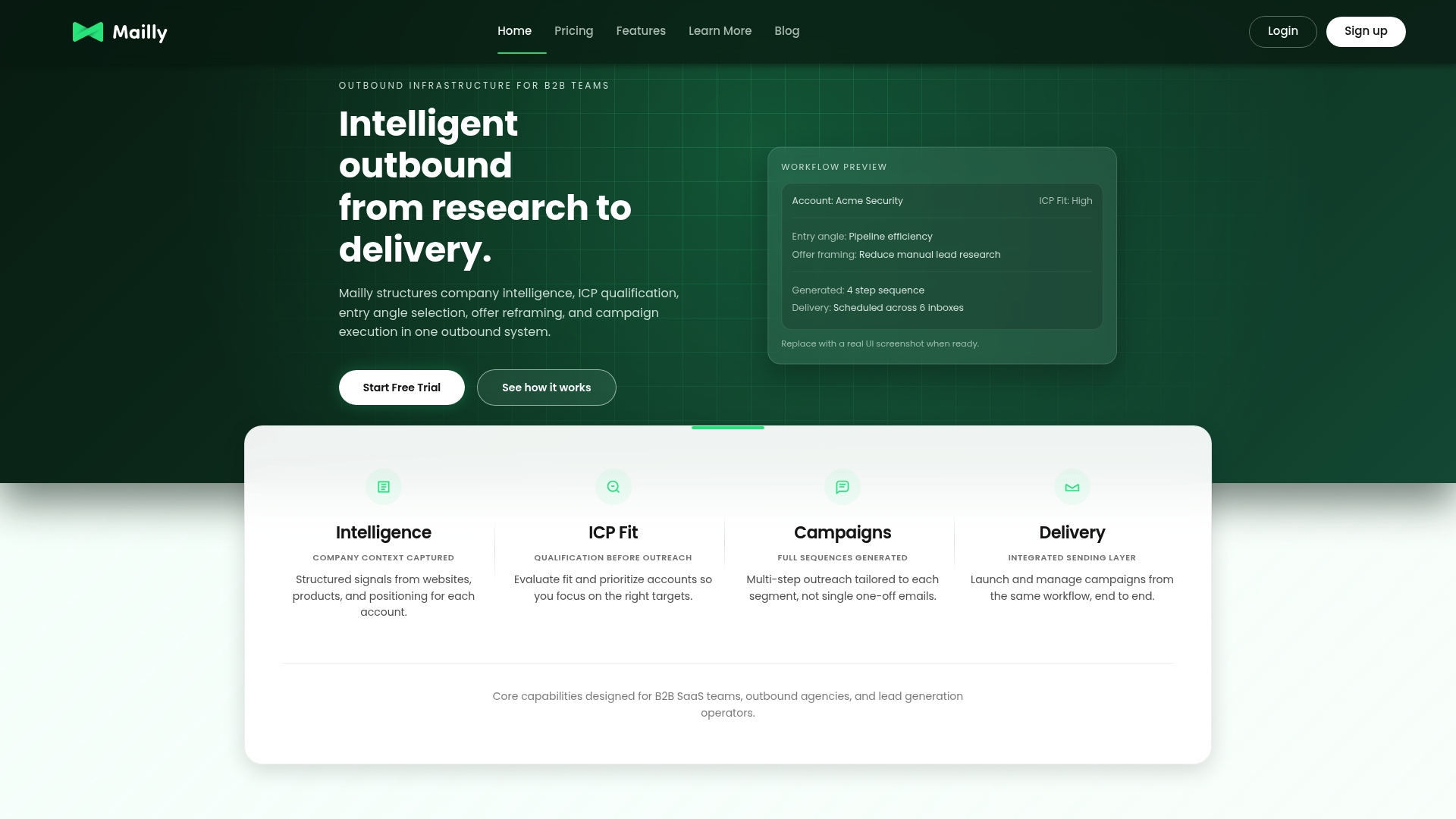
Take the next step toward higher engagement and smarter targeting by exploring how AI revolutionizes cold outreach with Mailly. Don’t settle for generic email blasts when you can make every message count. Visit Mailly now and see the future of B2B communication.
Frequently Asked Questions
What are the benefits of using AI in cold outreach?
AI enhances cold outreach by enabling hyper-personalized messaging, improving prospect engagement, and scaling outreach efforts without the need for extensive manual research. This results in higher conversion rates compared to traditional methods.
How does AI improve personalization in cold outreach?
AI improves personalization by analyzing vast amounts of data to create tailored messages that consider an organization’s recent developments, challenges, and strategic priorities, making each communication feel uniquely relevant to the recipient.
What are the risks associated with using AI for outreach?
Risks include data privacy vulnerabilities, potential algorithmic biases, and the need for extensive skill development to effectively implement and manage AI systems. Businesses should consider these factors before full adoption.
How can businesses measure the effectiveness of AI in their outreach efforts?
Businesses can measure effectiveness by assessing key performance indicators like response rates, conversion rates, and overall engagement metrics. Implementing a pilot program can help gauge AI outreach impact before scaling up.
Recommended
- 7 Must-Have Cold Outreach Metrics for B2B SaaS Success
- Optimizing Outreach Relevance for B2B SaaS Success
- What Is B2B Outreach and Why It Matters
- Why Personalize Cold Emails for B2B Impact
- Why Create AI-Responsive Content for Local Businesses – Moonrank – Get Recommended by ChatGPT & AI Search
- AI Automation for Startups Why Data Quality Beats Tool Selection
