

Cold outreach often gets a bad reputation when generic messages fall flat with decision-makers who want relevance and real understanding. For B2B SaaS founders and sales leaders, appreciating the true nature of B2B outreach means challenging outdated myths about rationality and channel importance in corporate communications. This guide cuts through common misconceptions to reveal why strategic, data-informed outreach centered around Ideal Customer Profile fit is now the key to winning meaningful business relationships.
Table of Contents
- Defining B2B Outreach And Common Myths
- Types Of B2B Outreach Channels And Tactics
- How B2B Outreach Works: ICP Fit And Personalization
- Strategic Approaches For Effective Outreach
- Risks, Costs, And What To Avoid In Outreach
Key Takeaways
| Point | Details |
|---|---|
| B2B Outreach Focus | B2B outreach emphasizes personalized communication and relationship-building over mass marketing approaches. |
| Importance of Personalization | Successful outreach strategies require deep understanding of potential clients’ challenges and goals for effective engagement. |
| Multi-Channel Strategy | Leveraging a mix of digital and traditional channels maximizes engagement and enhances outreach effectiveness. |
| Risk Management | Careful planning is essential to mitigate risks related to brand reputation and outreach costs in B2B activities. |
Defining B2B Outreach and Common Myths
B2B outreach represents a strategic communication approach where businesses proactively engage potential corporate clients, partners, or prospects through targeted, personalized interaction channels. Unlike traditional mass marketing, B2B outreach prioritizes precision, context, and relationship-building over volume-based strategies.
Understanding B2B outreach requires dismantling several pervasive myths that often mislead sales and marketing professionals. Contemporary research challenges traditional B2B perspectives, revealing nuanced realities about business decision-making processes:
- Myth 1: B2B buyers are purely rational actors
- Myth 2: Digital channels are less important in corporate communications
- Myth 3: Generic, mass-produced messaging works effectively
- Myth 4: Emotional factors do not influence professional purchasing decisions
Contrary to outdated assumptions, modern B2B outreach recognizes that corporate decision-makers are fundamentally human. Emotional intelligence, personalized communication, and deep contextual understanding now drive successful engagement strategies. Businesses must move beyond transactional approaches and develop genuine connections that demonstrate real value and understanding of potential partners’ specific challenges.
Key Characteristics of Effective B2B Outreach:
- Hyper-targeted research
- Personalized communication
- Value-driven messaging
- Strategic relationship building
- Data-informed approach
The evolution of B2B outreach reflects broader shifts in professional communication technologies and methodologies. Digital platforms, advanced research capabilities, and sophisticated analytics have transformed how businesses identify, approach, and engage potential corporate partners.
Pro tip: Invest more time in understanding your target company’s specific challenges and goals before initiating any outreach communication.
Types of B2B Outreach Channels and Tactics
B2B outreach encompasses a diverse range of communication channels and strategic approaches designed to connect with potential corporate clients and partners. Effective B2B outreach requires a multi-channel strategy that leverages digital and traditional platforms to maximize engagement and impact.
Primary B2B Outreach Channels:
- Email marketing
- LinkedIn networking
- Content marketing
- Account-based marketing
- Professional events and conferences
- Direct phone outreach
- Referral programs
- Strategic partnerships
Digital channels have dramatically transformed B2B communication, offering unprecedented opportunities for targeted, personalized engagement. Email remains a cornerstone of B2B outreach, but platforms like LinkedIn have emerged as powerful networking tools that enable direct, professional connections with decision-makers.

Here’s a quick comparison of digital vs. traditional B2B outreach channels and their unique advantages:
| Channel Type | Key Benefit | Typical Impact |
|---|---|---|
| Digital (Email, LinkedIn) | Scalable personalization | Faster response rates |
| Traditional (Events, Calls) | Deeper relationship-building | Trust and credibility gains |
| Hybrid Approach | Integrated engagement | Improved ROI and coverage |
Strategic Considerations for Channel Selection:
- Target audience demographics
- Industry-specific communication preferences
- Scalability of the channel
- Potential return on investment (ROI)
- Alignment with overall business objectives
Successful B2B outreach requires a nuanced, integrated approach that combines multiple channels. Modern businesses are increasingly using AI and advanced analytics to optimize their outreach strategies, enabling more precise targeting and personalization.
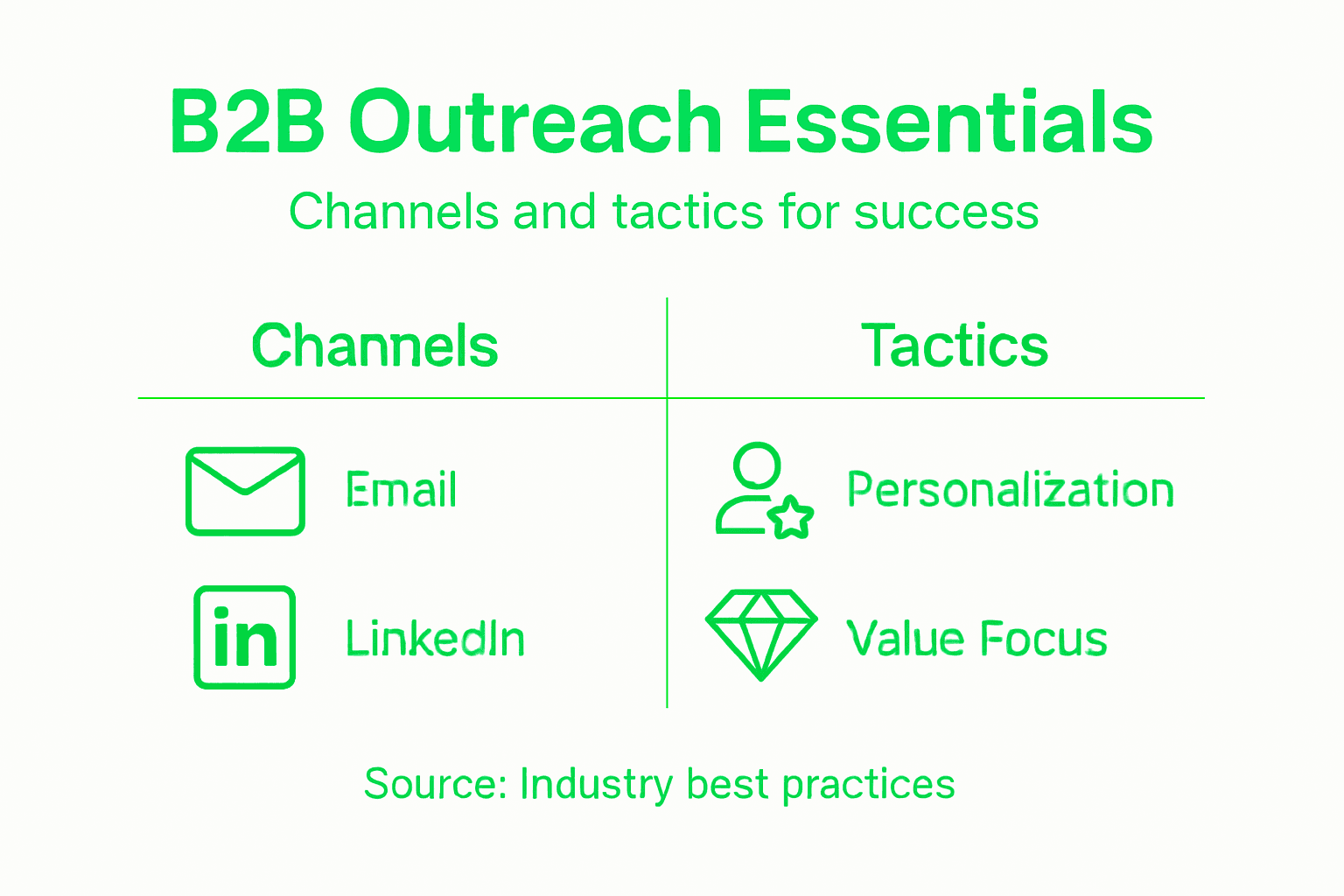
Pro tip: Develop a multi-channel outreach strategy that allows for seamless integration and consistent messaging across different communication platforms.
How B2B Outreach Works: ICP Fit and Personalization
Successful B2B outreach hinges on a sophisticated approach to identifying and engaging with the right potential clients. Building a precise Ideal Customer Profile (ICP) transforms outreach from a scattershot approach to a strategic, targeted methodology.
Key Components of ICP Development:
- Detailed firmographic analysis
- Behavioral pattern recognition
- Pain point identification
- Decision-maker mapping
- Revenue potential assessment
- Technological infrastructure evaluation
The core of effective B2B outreach lies in understanding that not all potential clients are created equal. Personalization goes far beyond using a prospect’s name in an email. It requires deep contextual research that reveals the specific challenges, strategic objectives, and unique operational dynamics of each target organization.
Personalization Depth Levels:
- Surface-level (name, company)
- Structural (organizational challenges)
- Strategic (business model insights)
- Predictive (future growth potential)
- Contextual (competitive landscape understanding)
Modern B2B outreach leverages advanced data analytics and AI-driven insights to create hyper-targeted communication strategies. The goal is not just to reach potential clients, but to demonstrate immediate, tangible value that speaks directly to their specific business context and challenges.
Pro tip: Invest more time in research than in crafting initial outreach messages, ensuring each communication is precisely tailored to the target organization’s unique needs and potential.
Strategic Approaches for Effective Outreach
Next-generation B2B sales strategies demand a sophisticated, multi-dimensional approach that transcends traditional communication methods. Modern outreach is about creating value, not just generating leads.
Key Strategic Dimensions:
- Relationship marketing
- Account-based targeting
- Data-driven personalization
- Technological integration
- Value co-creation
- Sustainability alignment
Successful B2B outreach requires a holistic strategy that combines technological capabilities with deep human understanding. This means moving beyond generic pitch decks and developing nuanced, contextually rich communication approaches that demonstrate genuine insight into a potential client’s business challenges and opportunities.
Strategic Outreach Framework:
- Comprehensive research and intelligence gathering
- Precise audience segmentation
- Contextual messaging development
- Multi-channel engagement
- Continuous performance optimization
Advanced organizations are increasingly adopting omnichannel approaches that seamlessly integrate digital and human touchpoints. The goal is to create a fluid, intelligent engagement ecosystem that adapts dynamically to each prospect’s unique characteristics and evolving needs.
Pro tip: Treat each outreach interaction as an opportunity to provide value, not just to sell a product.
Risks, Costs, and What to Avoid in Outreach
Cold B2B outreach economics reveal a complex landscape of potential risks and hidden expenses that can quickly erode marketing budgets if not carefully managed. Successful outreach demands strategic investment and meticulous planning.
Primary Outreach Cost Categories:
- Contact research expenses
- Message personalization efforts
- Messaging infrastructure
- Follow-up campaign management
- Response handling resources
- Potential reputation management
Beyond financial considerations, B2B outreach carries significant reputational risks that can permanently damage brand perception. Poorly executed communication strategies can transform potential opportunities into long-term relationship barriers, making precision and respect paramount in all interactions.
This summary contrasts major risks and costs in B2B outreach and their business consequences:
| Factor | Short-Term Impact | Long-Term Consequence |
|---|---|---|
| Excessive follow-ups | Prospect disengagement | Brand reputation damage |
| Poor personalization | Low response rates | Lost future opportunities |
| Data privacy breach | Legal penalties | Loss of client trust |
Critical Risks to Avoid:
- Over-aggressive follow-up sequences
- Generic, non-personalized messaging
- Ignoring recipient communication preferences
- Violating data privacy regulations
- Inefficient resource allocation
Modern B2B professionals must approach outreach as a nuanced art of value delivery, not a numbers game. This requires deep understanding of target organizations, genuine intent to solve problems, and a commitment to meaningful, respectful communication.
Pro tip: Allocate 70% of your outreach resources to research and personalization, and only 30% to actual message delivery.
Elevate Your B2B Outreach with Intelligent Personalization
Navigating the complexities of B2B outreach demands more than generic messaging and guesswork. As the article highlights, successful outreach hinges on deep contextual research, precise ICP fit, and hyper-targeted personalization to connect authentically with decision-makers. Avoid the common pitfalls of low response rates and wasted resources by embracing a strategy that prioritizes value and relevance over volume.
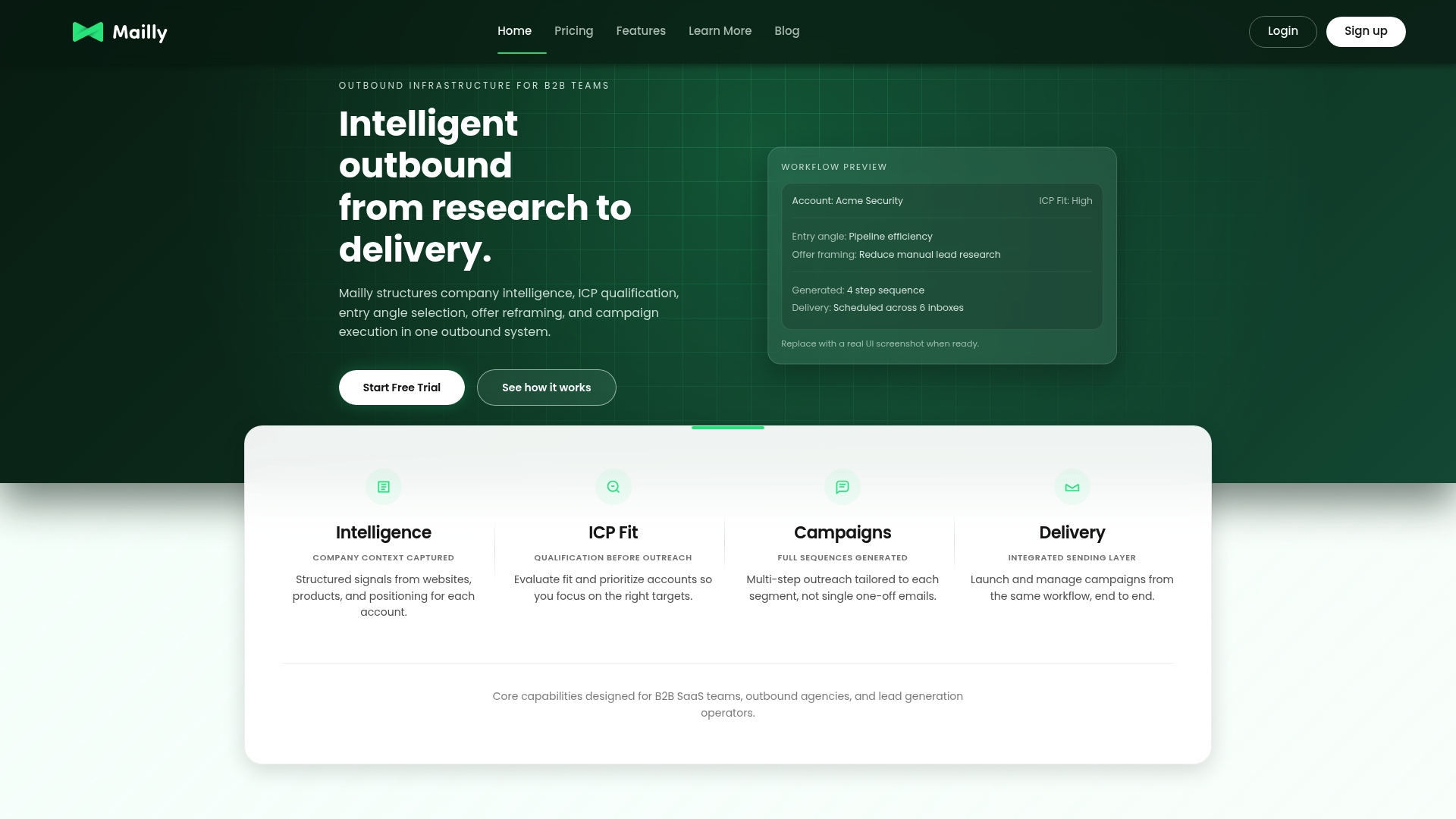
Transform your approach today with Mailly, an AI-powered outbound strategy engine designed to analyze your target company’s positioning, hiring signals, and competitive landscape. Instead of starting with email copy, Mailly helps you build psychologically sequenced campaigns tailored to your prospect’s unique business priorities—ensuring your message resonates deeply and drives real engagement. Experience outreach that feels intentional and strategic, not templated or random. Take the first step to refine your outreach strategy with Mailly and discover why multi-channel outreach combined with precise ICP development is the future of effective B2B communication.
Frequently Asked Questions
What is B2B outreach?
B2B outreach is a strategic communication approach where businesses proactively engage potential corporate clients, partners, or prospects through targeted, personalized interactions, focusing on relationship-building rather than volume-based strategies.
Why is personalization important in B2B outreach?
Personalization is crucial in B2B outreach because it goes beyond generic messaging. Understanding each target organization’s unique challenges and objectives helps in crafting communication that resonates, leading to more effective engagement and relationship-building.
What are the key characteristics of effective B2B outreach?
Effective B2B outreach is characterized by hyper-targeted research, personalized communication, value-driven messaging, strategic relationship building, and a data-informed approach that drives meaningful engagements.
What are some common channels used for B2B outreach?
Common channels for B2B outreach include email marketing, LinkedIn networking, content marketing, account-based marketing, professional events, direct phone outreach, referral programs, and strategic partnerships.
