

Every B2B SaaS founder knows the frustration of sending thoughtful outreach that lands with a thud instead of interest. When it comes to driving product-market fit, guessing who’s ready to buy is a costly gamble. Integrating firmographics with real-time behavioral and technographic data reveals which prospects are actively searching for solutions, allowing for a smarter, more contextual approach. This guide details how AI-driven analysis transforms outreach from hopeful to relevant, setting the stage for higher conversions and genuine market traction.
Table of Contents
- Step 1: Analyze ICP and Business Signals
- Step 2: Reframe Your Offer for Relevance
- Step 3: Build Psychologically Sequenced Campaigns
- Step 4: Verify Outreach Effectiveness
Quick Summary
| Key Point | Explanation |
|---|---|
| 1. Develop a Dynamic Ideal Customer Profile | Use firmographics and behavior signals to refine your ideal customer profile quarterly, ensuring you target prospects effectively. |
| 2. Tailor Your Message to Customer Pain Points | Shift from generic pitches to addressing specific operational challenges that your prospects face, enhancing relevance in your outreach. |
| 3. Create Structured Email Campaigns | Design email sequences that lead prospects through stages from awareness to action, aligning with their decision-making process. |
| 4. Focus on Relevant Metrics for Success | Measure response rates and qualified leads rather than vanity metrics to ensure your outreach translates into tangible revenue results. |
| 5. Test and Optimize Outreach Strategies | Conduct small-scale tests of your campaigns and refine based on what generates the best qualified responses before scaling up. |
Step 1: Analyze ICP and Business Signals
Your ideal customer profile isn’t just a list of company sizes and industries anymore. It’s a living, breathing data set that tells you who actually needs what you’re selling and when they’re ready to buy.
Start by collecting firmographics alongside real-time behavioral indicators. Company size, revenue, and industry remain foundational, but they’re insufficient on their own. You need intent signals showing buyer interest such as website visits, content downloads, technology adoption patterns, and hiring activity.
This multi-layered approach reveals which prospects are actively seeking solutions:
- Website engagement: Track pages visited, time spent, return visits, and content consumed
- Technology stack signals: Monitor which tools they’re adopting or replacing
- Team composition: Notice hiring patterns that signal business priorities or pain points
- Competitive context: Identify if they’re evaluating alternatives or moving away from current solutions
Actually mapping this requires you to move beyond hunches. Pull data from LinkedIn, your website analytics, LinkedIn Sales Navigator, and any proprietary signals you can track. The goal isn’t comprehensive coverage—it’s identifying the specific behaviors that correlate with your highest-value customers.
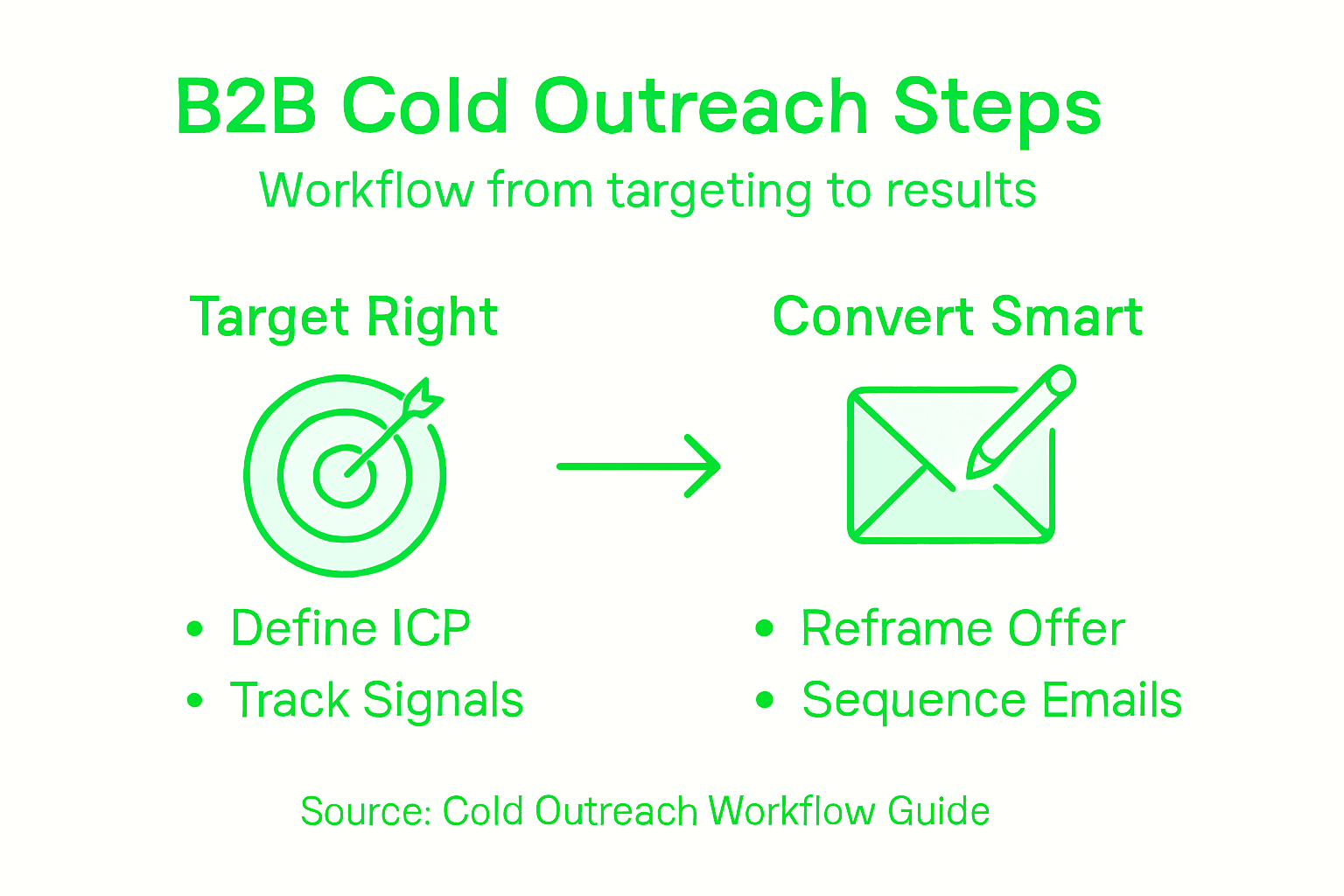
Here’s a summary of key buying signals and their business value:
| Signal Type | What It Reveals | Business Impact |
|---|---|---|
| Website Engagement | Level of product interest | Pinpoints ready-to-buy leads |
| Technology Adoption | Current tech stack changes | Identifies tech-fit prospects |
| Hiring Activity | Shifts in priorities or growth | Spots timing for outreach |
| Competitive Activity | Switching/loss of vendors | Capitalizes on market gap |
Once you’ve identified these patterns, you can implement predictive qualification methods that automatically score prospects based on how closely they match both your firmographic criteria and their demonstrated buying signals.
Your ICP should evolve quarterly as you learn which signals predict the best outcomes. Static profiles lose value quickly.
This groundwork matters because it determines everything downstream: who you target, what you say to them, and whether your outreach converts. Without accurate signal analysis, you’re essentially guessing—and that’s when budgets get wasted on volume instead of precision.
Pro tip: Prioritize identifying 2-3 high-conviction signals that strongly correlate with your best customers, then build your outreach around confirming those signals in real time. This beats trying to monitor dozens of weaker indicators.
Step 2: Reframe Your Offer for Relevance
You’ve identified the right prospects. Now comes the harder part: making your solution feel like it was built specifically for them.

Reframing your offer means abandoning the standard pitch. Instead of leading with your product features or your company story, you start with the prospect’s actual business bottleneck. What operational challenge are they facing? What competitive pressure is forcing their hand? What inefficiency is bleeding money?
This shift requires translating your value proposition through their lens:
- Identify the bottleneck: Use the signals from your ICP analysis to pinpoint their specific pain point, not a generic problem your product solves
- Map your solution to their priority: Show how your offering directly addresses that bottleneck, not how it addresses ten other things
- Speak their business language: Use their terminology, reference their industry context, acknowledge their competitive position
- Connect to measurable outcomes: Explain the financial or operational impact they can expect, tied to their specific situation
The difference between a generic pitch and a reframed offer is stark. Generic: “Our platform automates workflows.” Reframed: “For companies like yours scaling their revenue operations, manual lead routing is consuming 15 hours per week per person. Automation here recovers that capacity while improving handoff speed by an average of 60%.” The second approach shows you’ve done your homework and understand their world.
When you optimize outreach relevance, you’re essentially building a bridge between what they need and what you offer. This is where personalization stops being cosmetic (adding their name) and becomes strategic (addressing their real constraints).
The best offers don’t explain your product. They explain how your product solves a specific problem your prospect actually has.
Reframing takes discipline because you must resist the urge to talk about yourself. It’s tempting to mention your awards, your funding, your customer list. Resist. Their attention is finite, and every word spent on context about you is a word not spent on solving their problem.
Pro tip: Create 3-5 distinct reframes of your core offer, each addressing a different bottleneck your ICP experiences. Use the signals from your prospect’s company to select which reframe to deploy in your outreach.
Step 3: Build Psychologically Sequenced Campaigns
A single email rarely converts anyone. Your prospects need a sequence that moves them through a psychological journey from skepticism to action.
Psychological sequencing works because it mirrors how buyers actually make decisions. They don’t jump from “I’ve never heard of you” to “Let’s sign a contract.” Instead, they move through predictable stages: awareness, credibility assessment, problem recognition, and finally, action. Your email sequence should map to this reality.
Structure your campaign in three distinct phases:
- Establish trust and relevance – Lead with the reframed offer from Step 2. Show you understand their world. No ask here, just proof that you’ve done your homework.
- Build urgency and clarity – Introduce the cost of inaction. Reference their competitive position or the market trend forcing change. Help them see why now matters.
- Drive action – Make the next step obvious and low-friction. Whether it’s a 15-minute call or a single question, remove friction from saying yes.
Research on consumer psychology and behavioral triggers shows that this stepwise approach aligns with how prospects process information and make decisions. Each message should ladder on the previous one, deepening their understanding of why your solution fits their situation.
The spacing between emails matters just as much as the content. Three messages in three days can feel like harassment. Space them five to seven days apart, allowing their reality to make your case for you.
When you implement email campaign psychology, each message becomes part of a larger system. Message one plants a seed. Message two waters it. Message three harvests the growth.
Each email in your sequence should move the prospect one step closer to action, not ask for everything at once.
Many founders skip sequencing and send standalone emails. They wonder why response rates plateau. The truth is that one-off outreach leaves money on the table. Sequences give your message multiple chances to land, in different contexts, with different emotional hooks.
Pro tip: Test your sequence on a small batch first. Track which message generates the most replies. Double down on that psychological trigger and refine the messaging before scaling to larger lists.
Step 4: Verify Outreach Effectiveness
You’ve built a targeted campaign with psychological sequencing. Now comes the part most founders get wrong: actually measuring whether it’s working.
Most teams obsess over vanity metrics. They celebrate open rates and click rates as if those numbers translate to revenue. They don’t. You need to track signals that actually matter to your business.
Compare the effectiveness of common cold outreach metrics:
| Metric | What It Measures | True Value for Campaigns |
|---|---|---|
| Open Rate | Email interest level | Low if not converting |
| Click Rate | Engagement with content | Useful for funnel insights |
| Response Rate | Total replies received | Basic effectiveness |
| Qualified Response % | Genuine prospect interest | Best predictor of revenue |
| Revenue per Lead | Profit from each lead | Direct impact on ROI |
Start by establishing a baseline. Before you scale, run your campaign on a small test group of 50 to 100 prospects. Track these metrics ruthlessly:
- Response rate: Percentage of prospects who reply to any message in your sequence
- Qualified response rate: Replies that indicate genuine interest or fit, not just politeness
- Conversion to meeting: How many responses turn into scheduled calls or demos
- Revenue per lead: The ultimate metric—what’s each lead worth once they convert
The gap between total responses and qualified responses reveals everything. If you’re getting 15% response rate but only 2% are qualified, your offer reframing isn’t working. The sequence is interesting, but not relevant enough.
Understanding cold outreach metrics helps you distinguish between activity and results. Your job is to optimize for the metrics that connect to revenue, not the ones that make dashboards look pretty.
After your test run, analyze what worked. Did message one or message two generate more replies? Which prospect segments converted at higher rates? What reframe resonated most? This data should guide your next iteration.
A 2% qualified response rate from 1,000 prospects beats a 5% total response rate from 10,000 prospects. Precision beats volume.
Once you’ve validated the approach works at small scale, you can confidently expand. Double your list. Monitor the metrics again. If performance holds, scale further. If it dips, stop and investigate. The difference between a 2% conversion rate and a 1% conversion rate is the difference between a sustainable acquisition channel and wasted budget.
Pro tip: Set a weekly dashboard that tracks response rate, qualified response rate, and revenue per lead. Review it every Friday and adjust your offer or sequencing based on what the data shows, not what you hope is true.
Supercharge Your Cold Outreach with Smart AI-Powered Strategies
Struggling to translate your cold outreach efforts into real conversations and qualified leads The article highlights the need to analyze true buying signals and reframe offers to meet your ideal customer profile’s immediate priorities. These challenges are exactly why Mailly’s AI-powered outbound strategy engine was designed to transform your approach. By diving deep into your prospect’s hiring activity, competitive landscape, and technology stack, Mailly helps you pinpoint actionable business bottlenecks and craft psychologically sequenced email campaigns that drive meaningful engagement — not random volume.
Discover how to make your outreach intentional and relevant with Mailly.
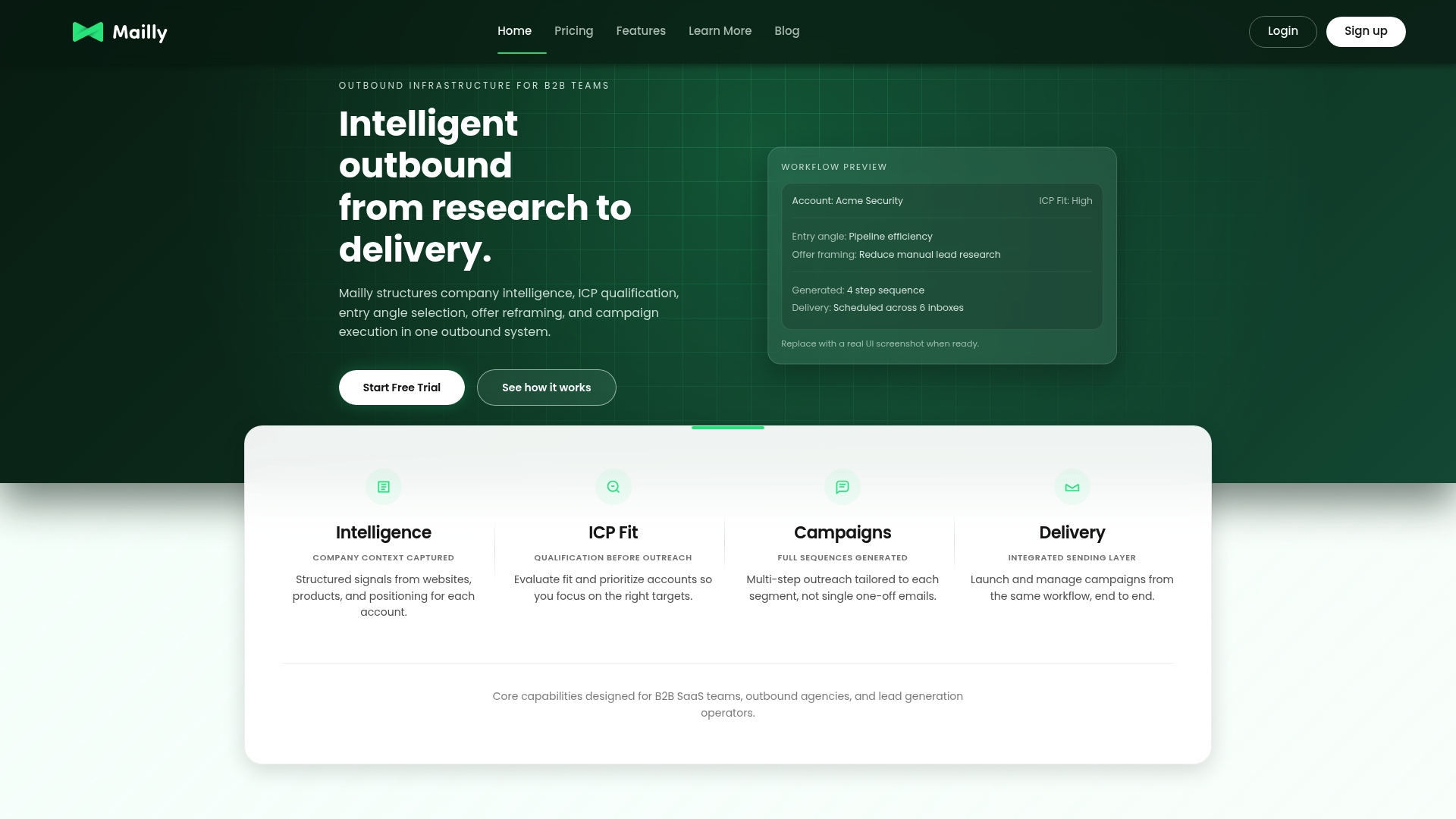
Ready to escape guesswork and start generating qualified leads using proven methods from the Cold Outreach Workflow Guide for B2B Success Tap into AI-driven insights today and build campaigns that connect with your prospects’ real pain points. Visit Mailly now to learn more and get started.
Frequently Asked Questions
How do I analyze my ideal customer profile (ICP) for cold outreach?
To analyze your ideal customer profile, collect firmographics and intent signals like website engagement and hiring activity. Start by identifying 2-3 key signals that align with your best customers to optimize your targeting.
What should I include in my cold outreach messages to make them effective?
Your cold outreach messages should focus on the prospect’s specific business challenges rather than your product features. Highlight how your solution addresses their pain points and connects to measurable outcomes to demonstrate relevance.
How can I structure a psychological email campaign for cold outreach?
Structure your email campaign in three phases: establish trust with a reframed offer, build urgency by stating the cost of inaction, and drive action by making the next step clear and easy to take. Space your emails out over five to seven days to allow prospects to engage with your messaging effectively.
What metrics should I track to verify the effectiveness of my cold outreach?
Track metrics such as response rate, qualified response rate, and revenue per lead to gauge your outreach effectiveness. Focus on metrics that directly relate to conversions rather than vanity metrics like open rates, which don’t indicate true engagement.
How often should I iterate on my cold outreach approach?
You should iterate on your cold outreach approach based on data from smaller test group campaigns at least every few weeks. Analyzing which messages resonated can help refine your strategy and improve your conversion rates.
What is the significance of verifying outreach effectiveness in B2B cold outreach?
Verifying outreach effectiveness ensures that you’re not just measuring activity but also tracking results that impact your business. Focus on the gap between total responses and qualified responses to gain insights into your offer’s relevance and campaign success.
