

English outreach intro for B2B SaaS founders
Table of Contents
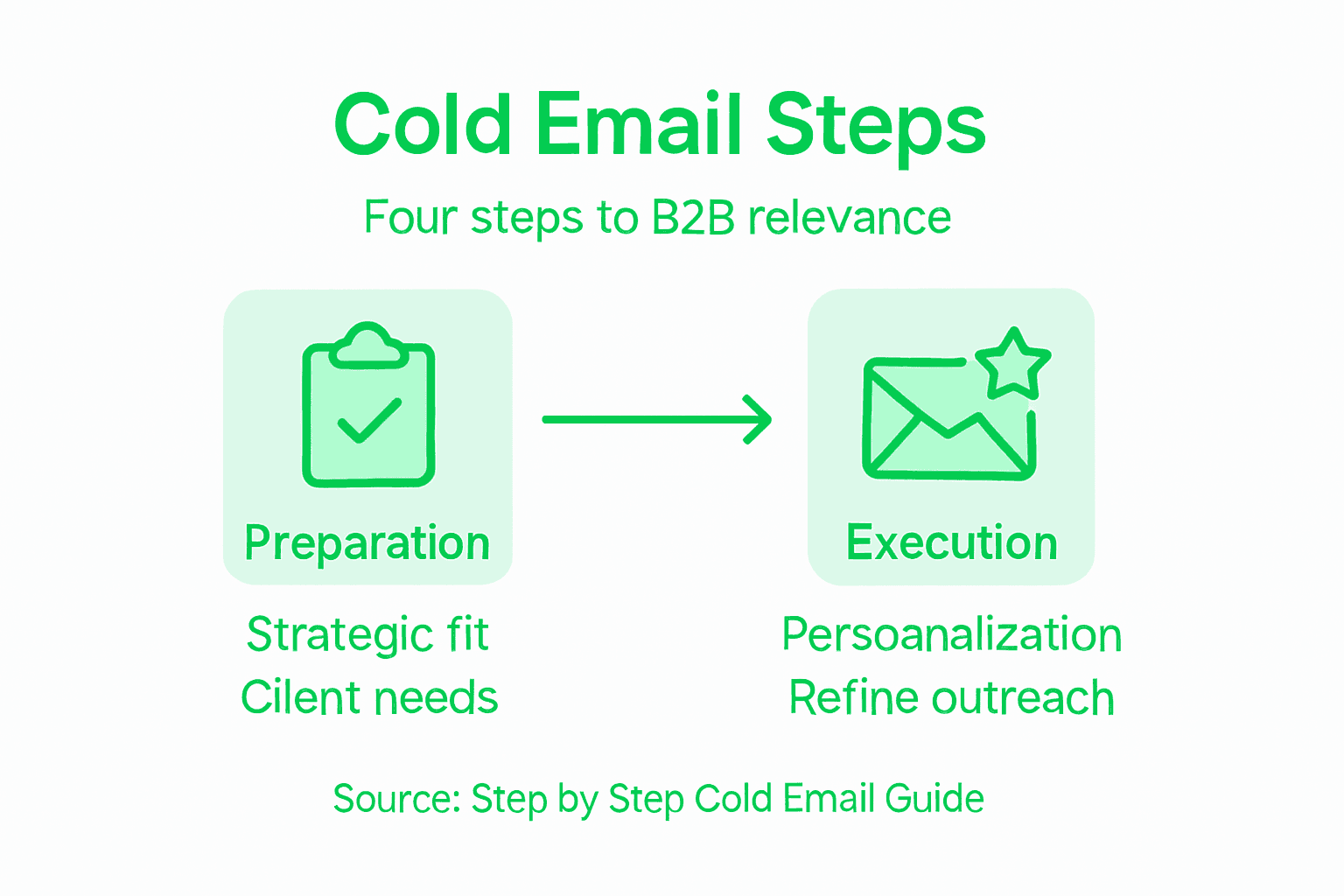
- Step 1: Analyze Targets For Strategic Fit
- Step 2: Reframe Offers Around Client Needs
- Step 3: Craft Personalized Email Sequences
- Step 4: Test And Refine Campaign Outreach
Quick Summary
| Key Point | Explanation |
|---|---|
| 1. Analyze Strategic Fit | Ensure your prospects align with your solution to avoid wasted efforts and increase engagement. |
| 2. Understand Client Needs | Shift focus from product features to specific problems your prospects face, enhancing the appeal of your email. |
| 3. Personalize Email Sequences | Utilize a series of tailored emails to build relevance and increase the likelihood of engagement. |
| 4. Test and Refine Campaigns | Use data-driven insights to continuously improve outreach effectiveness and overall campaign performance. |
Step 1: Analyze targets for strategic fit
You can’t build a sustainable outreach program on volume alone. Before you send anything, you need to understand whether a prospect’s business actually aligns with your solution. This step separates real opportunities from noise.

Start by examining the company’s core context. What industry are they in? What’s their company size and stage? These aren’t trivial details—they determine whether your offering solves a real problem for them. A compliance tool built for enterprises won’t resonate with a bootstrapped startup, no matter how well-written your email is.
Next, investigate recent business signals. Look for hiring announcements, funding rounds, product launches, or technology migrations. These events reveal what’s actually happening inside the company right now. Someone who just hired their first data engineer likely has different priorities than someone optimizing an existing team.
Research shows that effective B2B cold emailing begins with strategic fit analysis of targets to ensure their business context aligns with your offering. This means checking their technological stack, competitive positioning, and monetization model. Are they using tools that conflict with yours? Are they growing or consolidating?
Also evaluate the role relevance. A VP of Engineering at a fintech company isn’t the right contact for a design tool meant for internal teams. The person’s actual job function matters as much as the company context.
Here’s what your analysis checklist should include:
- Industry vertical and market segment
- Company size and growth stage
- Recent hiring, funding, or product announcements
- Current technology stack and tooling
- Competitive landscape and positioning
- Decision-maker role and department
Strategic fit analysis reduces spam perceptions and increases engagement because you’re targeting people who actually need what you’re offering, not just names on a list.
Pro tip: Create a simple scoring system for each prospect based on fit criteria—industry match (yes/no), company size (target range), recent signal (within last 90 days). This discipline prevents you from wasting time on marginal fits that will never convert.
Step 2: Reframe offers around client needs
Your product features don’t matter. What matters is what they solve for the person reading your email. This step transforms your offering from a generic pitch into a targeted solution.
Start by diagnosing the prospect’s actual problem before you mention your solution. You’ve already done the research in Step 1, so you know what’s happening in their world. A company that just scaled their engineering team has different pain points than one consolidating tooling. Reference the specific challenge you identified.
Next, connect your offering directly to that problem. This is where problem-solution approaches in B2B cold emails resonate more effectively because you’re positioning the offer as a solution to their specific challenge, not as a product feature dump.
The reframing process looks like this:
- State the problem you observed (with a signal as proof)
- Explain why that problem matters to their business
- Introduce your solution as the natural answer
- Include evidence like case studies or specific results
Your goal is to shift from features to outcome-driven benefits. Instead of saying “our tool integrates with five platforms,” say “we help teams reduce manual data entry by 70 percent, freeing engineers to focus on product work.”
Outcome-driven benefits with evidence like case studies demonstrate tangible value and build credibility. Show how similar companies solved the same problem.
Here’s what makes reframing work:
- Mentions their specific situation, not generic industry trends
- Shows you understand their timeline and priorities
- Positions your offer as a logical next step, not a surprise
- Includes social proof or measurable outcomes
Reframing around client needs shifts you from vendor to consultant in their mind, dramatically increasing the chance they’ll respond.
Pro tip: Before writing any email, write a single sentence that describes their problem in their own language, not yours. If you can’t write that sentence clearly, you haven’t done enough research yet. That sentence becomes the foundation for everything else.
Step 3: Craft personalized email sequences
A single email almost never closes a deal. Your prospect needs to see your message multiple times across different angles before they take action. This step builds a sequence that keeps you relevant without becoming annoying.
Start by mapping out your sequence structure. Most effective outreach follows a three to five email arc over 10 to 14 days. The first email introduces the problem and your angle. The second email adds social proof or a different perspective on the same issue. The third email might include a specific case study or tactical insight.
Each email should serve a distinct purpose rather than repeating the same pitch. Think of your sequence as a conversation, not a broadcast. The second email assumes they read the first one but didn’t respond. The third acknowledges their silence and offers a new reason to care.
When building personalized cold email strategies, timing matters as much as content. Space your emails across multiple days to avoid looking like spam or aggressive. A typical sequence might be Day 1, Day 4, Day 8, with optional Day 12 and Day 15 follow-ups if warranted.
Here’s how to structure each email in your sequence:
- Email 1: Problem statement and your credibility
- Email 2: New angle, social proof, or tactical insight
- Email 3: Specific case study or measurable outcome
- Email 4 (optional): Value-add content or final permission ask
- Email 5 (optional): Graceful exit or pivot to different angle
Personalization goes beyond using their name. Reference something specific from your Step 1 research in each email. Different emails can highlight different pain points from the same company.
The goal of a sequence is not to convince on the first email, but to build enough context and credibility that a conversation becomes worth their time.
Understanding email campaign psychology for B2B outreach helps you craft messages that trigger responses at psychological checkpoints rather than relying on desperation or urgency.
Pro tip: Write all five emails at once, then go back and vary the sentence structure, word choice, and topic angle so they feel like a conversation instead of templates. If you notice identical phrases appearing twice, rewrite one. Pattern variation keeps prospects engaged across multiple touches.
Step 4: Test and refine campaign outreach
You don’t optimize based on intuition. You optimize based on what the data tells you. This step turns your campaign into a learning system that gets better every week.
Start by establishing your baseline metrics. Before you can refine anything, you need to know what you’re measuring. The key metrics that matter are deliverability rate, open rate, reply rate, and conversion rate. These tell you if your message is reaching inboxes, getting read, and driving responses.
Deliverability is your foundation. If emails aren’t landing in inboxes, nothing else matters. Best practices for refining cold email campaigns include warming up domains, segmenting lists for relevance, and personalizing content genuinely to maintain sender reputation and inbox placement.
Once you know your baseline, identify what to test. Common variables include subject line language, email length, call-to-action phrasing, and send timing. Change one element at a time so you can actually isolate what moved the needle.
Here’s what to monitor weekly:
- Deliverability rate (target: 95 percent or higher)
- Open rate (varies by industry, but 20 to 40 percent is solid)
- Reply rate (5 to 15 percent is strong for B2B)
- Conversion rate (replies that turn into qualified conversations)
Don’t wait for a campaign to fully complete before reviewing data. Pull metrics every five to seven days and adjust sequences or targeting based on what you see. If a particular angle gets zero opens, that’s a signal to pivot before you send 500 more emails with the same approach.
Here’s a quick comparison of common email outreach metrics and what they reveal:
| Metric | What It Measures | Typical Target | Business Insight |
|---|---|---|---|
| Deliverability | Inbox placement success | 95% or higher | Sender reputation health |
| Open Rate | Emails opened per 100 sent | 20–40% | Subject line and timing fit |
| Reply Rate | Positive replies per 100 | 5–15% | Message relevance and resonance |
| Conversion Rate | Qualified meetings booked | 2–7% | Overall campaign effectiveness |
Multi-touch sequences and multi-channel outreach including LinkedIn expand your surface area for contact, but only if you’re measuring which channels drive actual responses.
Data without action is just noise. Measure weekly, identify one clear insight, and change one thing. Repeat.
Pro tip: Track your metrics in a simple spreadsheet with dates and changes you made. When reply rates drop 40 percent, you’ll want to know exactly what changed three weeks ago. Historical context reveals patterns that weekly numbers alone never will.
This summary shows how each outreach step adds value to your campaign process:
| Step | Key Objective | Main Business Benefit |
|---|---|---|
| Analyze Strategic Fit | Target the right prospects | Higher engagement, less wasted effort |
| Reframe Around Client Needs | Show tailored solutions | Increased reply likelihood |
| Craft Personalized Sequences | Stay relevant over time | Builds credibility and trust |
| Test and Refine Campaigns | Improve with data-driven tweaks | Higher ROI, sustained results |
Unlock B2B Outreach That Truly Connects
The article “Step by Step Cold Email Guide for B2B Relevance” highlights the challenge of cutting through generic messaging by focusing on strategic fit, personalized offers, and multi-touch sequences based on real business signals. If you struggle to craft cold emails that resonate deeply and spark genuine replies, you are not alone. Common pain points include wasting time on low-fit prospects, sounding like every other vendor, and lacking a tested data-driven approach to refine campaigns.
This is exactly where Mailly shines. Our AI-powered outbound strategy engine dives into the core context of each prospect’s business from industry positioning to hiring signals and competitive landscape. By analyzing these details Mailly reframes your offer around the precise needs of your target and creates carefully sequenced cold email campaigns designed for relevance and engagement, not volume. The result is outreach that feels intentional and consulting-focused instead of templated or random.
Take control of your outreach success today and transform your results by exploring how Mailly’s AI-powered strategy engine can evolve your process.
Ready to stop guessing and start sending emails that get real responses? Visit Mailly and discover how to build outreach campaigns grounded in strategic fit, client-centric insights, and continuous refinement. Make each message count now.
Frequently Asked Questions
How do I identify the right prospects for my cold email campaign?
To identify the right prospects, analyze their industry, company size, recent business signals, and technology stack. Start by creating a checklist that includes these criteria to ensure they align with your solution.
What should I include in my cold email to address the prospect’s needs?
Focus on diagnosing the prospect’s specific problem before mentioning your solution. Clearly state the observed challenge, explain its importance to their business, and connect your offering directly as the answer.
How many emails should I include in my outreach sequence?
A successful outreach sequence typically consists of three to five emails over 10 to 14 days. Structure each email with a distinct purpose to build a conversation rather than repeating the same pitch.
What metrics should I track to measure the success of my cold email campaign?
Key metrics to track include deliverability rate, open rate, reply rate, and conversion rate. Establish a baseline for these metrics and review them weekly to guide your optimization efforts.
How can I personalize my cold emails effectively?
Personalization goes beyond adding the recipient’s name; reference specific details from your research about the prospect’s company or their current needs. Tailor each email to highlight different pain points and solutions based on your initial analysis.
