

Cold outreach that lands in crowded American inboxes often goes unnoticed, even when your solution could be the perfect fit. Choosing the right words, timing, and emotional cues can mean the difference between a missed opportunity and a warm new lead. Psychological triggers like urgency, reciprocity, and social proof are proven to turn routine emails into persuasive touchpoints. Discover how understanding recipient behavior helps craft targeted campaigns that capture attention and inspire genuine interaction.
Table of Contents
- Defining Email Campaign Psychology In Outreach
- Psychological Triggers That Drive Engagement
- Sequencing And Personalization For B2B Success
- Leveraging Research For Relevant Messaging
- Common Pitfalls In Psychology-Driven Campaigns
Key Takeaways
| Point | Details |
|---|---|
| Understanding Email Campaign Psychology | Email campaigns should leverage psychological principles to increase engagement and response rates by resonating with recipients’ emotions and motivations. |
| Utilizing Psychological Triggers | Key triggers such as urgency, social proof, and personalization enhance recipient interaction, driving faster action and improving conversion rates. |
| Effective Email Sequencing | Gradual commitment techniques and behavioral tracking tailored to the recipient’s context foster meaningful engagement in B2B outreach. |
| Avoiding Common Pitfalls | Marketers must be cautious of over-personalization and cognitive overload, adapting strategies to maintain effectiveness and recipient trust. |
Defining Email Campaign Psychology in Outreach
Email campaign psychology represents the strategic application of psychological principles to digital communication, focusing on how recipients cognitively and emotionally process targeted messages. At its core, this discipline explores how behavioral triggers and cognitive mechanisms influence recipient engagement and response rates in business communication.
Understanding email campaign psychology requires examining how targeted digital communication strategies leverage human information processing. The fundamental goal is creating messages that resonate with recipients’ intrinsic motivations, decision-making patterns, and emotional landscapes.
Key psychological elements in email outreach include:
- Triggering curiosity through strategic information gaps
- Utilizing social proof and credibility signals
- Personalizing content to create immediate relevance
- Structuring messages that align with recipient’s cognitive processing preferences
Psychological Triggers function as critical conversion mechanisms in email campaigns. They transform generic communication into compelling narratives that prompt specific recipient actions. By understanding cognitive biases, emotional response patterns, and decision-making frameworks, marketers can design more effective outreach strategies.
Pro tip: Craft email subject lines that create mild cognitive tension, encouraging recipients to open and engage with your message.
Psychological Triggers That Drive Engagement
In the realm of B2B email marketing, understanding psychological triggers is critical for creating compelling communication that transforms passive recipients into active participants. Psychological techniques in email marketing leverage fundamental human cognitive and emotional mechanisms to drive engagement and response.
The most potent psychological triggers in email outreach include several key strategies:
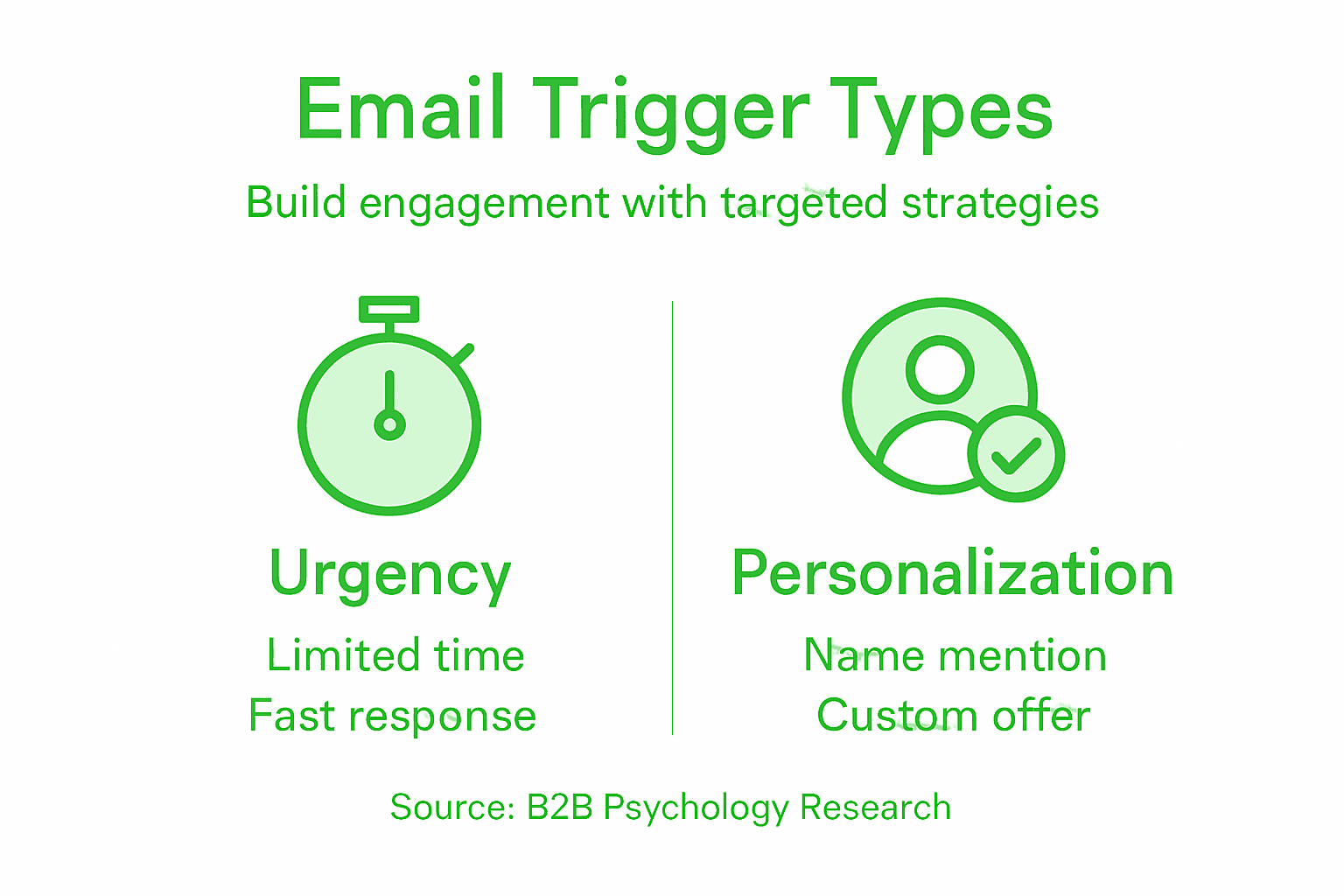
- Urgency: Creating a time-sensitive context that compels immediate action
- Social Proof: Demonstrating credibility through peer validation and testimonials
- Reciprocity: Offering value upfront to generate a sense of obligation
- Personalization: Tailoring content to individual recipient contexts and preferences
These triggers tap into deep-rooted psychological mechanisms that influence decision-making. Urgency and scarcity, for instance, activate the brain’s fear of missing out (FOMO), prompting faster responses. Social proof reduces perceived risk by showing that others have already validated the message or offer.
Here’s a comparison of key psychological triggers and their effects in email marketing:
| Trigger Type | Primary Effect | Business Value |
|---|---|---|
| Urgency | Inspires quick decision-making | Boosts immediate responses |
| Social Proof | Increases trust and credibility | Reduces recipient skepticism |
| Reciprocity | Builds mutual obligation | Enhances long-term engagement |
| Personalization | Creates deeper relevance | Improves conversion rates |
Psychological triggers transform generic communication into strategic narratives that guide recipient behavior and increase engagement rates.
By strategically incorporating these triggers, marketers can design email campaigns that don’t just communicate but genuinely connect with recipients’ intrinsic motivations. The key is understanding that successful communication goes beyond information delivery—it’s about creating a resonant emotional experience.
Pro tip: Craft email content that balances informational value with subtle psychological nudges to maximize recipient engagement.
Sequencing and Personalization for B2B Success
In B2B email marketing, effective communication hinges on strategic email sequencing and personalization techniques, transforming cold outreach into meaningful conversations. This approach moves beyond generic templates, creating a nuanced communication strategy that resonates with individual prospects.
Key components of effective email sequencing include:
- Gradual Commitment: Starting with low-stakes requests
- Progressive Personalization: Deepening contextual relevance
- Behavioral Tracking: Adapting messaging based on recipient interactions
- Contextual Timing: Aligning communication with prospect’s business cycles
The foot-in-the-door technique proves particularly powerful in B2B contexts. By initiating contact with small, manageable requests, marketers can build initial rapport and incrementally increase engagement. This psychological approach leverages the principle of consistent self-perception, where recipients who agree to small actions become more likely to consider larger proposals.
Personalization is not just about using a recipient’s name—it’s about demonstrating genuine understanding of their business challenges and opportunities.
Successful personalization requires deep research and contextual intelligence. Marketers must go beyond surface-level details, crafting messages that reflect a comprehensive understanding of the recipient’s industry, company positioning, and potential pain points.

Pro tip: Develop a dynamic email sequence that adapts based on recipient behavior, treating each interaction as a learning opportunity for more precise targeting.
Leveraging Research for Relevant Messaging
Psychological research transforms email marketing from generic communication to precision-targeted engagement. Understanding audience cognitive psychology enables marketers to craft messages that resonate deeply with recipients’ underlying motivations and decision-making processes.
Key research-driven messaging strategies include:
- Cognitive Load Management: Simplifying complex information
- Emotional Trigger Identification: Mapping recipient’s psychological landscape
- Motivation Pattern Analysis: Uncovering core decision drivers
- Behavioral Prediction: Anticipating potential response scenarios
Successful B2B messaging requires moving beyond surface-level personalization. Cognitive bias exploration reveals how professionals process information, make decisions, and respond to strategic communication. By understanding principles like confirmation bias, reciprocity, and social proof, marketers can design messages that feel intuitively compelling.
Relevant messaging is not about being liked—it’s about being understood at a profound psychological level.
Research demonstrates that effective communication hinges on alignment with the recipient’s mental framework. This means developing messaging that speaks directly to specific professional challenges, aspirations, and contextual nuances unique to each prospect’s business environment.
Pro tip: Conduct deep psychological research on your target audience, treating each email as a precision-engineered communication instrument.
Common Pitfalls in Psychology-Driven Campaigns
Psychology-driven email campaigns can quickly derail when marketers misapply fundamental principles. Psychological tactics in email marketing require nuanced understanding to avoid critical errors that undermine campaign effectiveness.
Common psychological pitfalls in B2B email outreach include:
- Over-Personalization: Crossing privacy boundaries
- Urgency Fatigue: Diminishing trust through excessive time pressure
- Cognitive Overload: Overwhelming recipients with complex messaging
- Generic Psychological Manipulation: Ignoring individual differences
The most dangerous trap is treating psychological insights as a one-size-fits-all strategy. Emotional engineering demands sophisticated, adaptive approaches that respect individual cognitive landscapes. Marketers must recognize that psychological triggers are precision instruments, not blunt force tools.
The following table summarizes common pitfalls in psychology-driven campaigns and their impact:
| Pitfall | Cause | Negative Outcome |
|---|---|---|
| Over-Personalization | Excessive data use | Erodes recipient trust |
| Urgency Fatigue | Frequent time pressures | Reduces response rates |
| Cognitive Overload | Too much information | Causes decision paralysis |
| Generic Manipulation | One-size-fits-all techniques | Decreases campaign relevance |
Psychological effectiveness is about subtle understanding, not aggressive manipulation.
Successful campaigns require continuous refinement, recognizing that psychological responses evolve. What worked yesterday might trigger skepticism today. Sophisticated marketers constantly test, learn, and recalibrate their understanding of recipient psychology.
Pro tip: Develop a robust feedback mechanism that tracks psychological response signals beyond traditional metrics like open and click rates.
Unlock Precision and Relevance in Your B2B Email Campaigns
The article highlights key challenges such as overcoming cognitive overload, avoiding urgency fatigue, and crafting psychologically sequenced outreach that resonates on a deep level. If your goal is to move beyond generic templates and leverage insights like behavioral triggers, personalization, and strategic sequencing, you need a solution that puts deep research and psychological relevance first.
Mailly is an AI-powered outbound strategy engine that tackles these pain points by analyzing critical factors like company positioning, monetization models, and hiring signals. This analysis helps reframe your offer to match your recipient’s true priorities while building email campaigns designed for real engagement—not random bulk messaging. Mailly’s approach aligns perfectly with the psychological principles of gradual commitment and contextual timing discussed in the article.
Elevate your email outreach with targeted, intelligent campaigns that connect emotionally and cognitively with your prospects.
See how Mailly transforms cold outreach into meaningful conversations
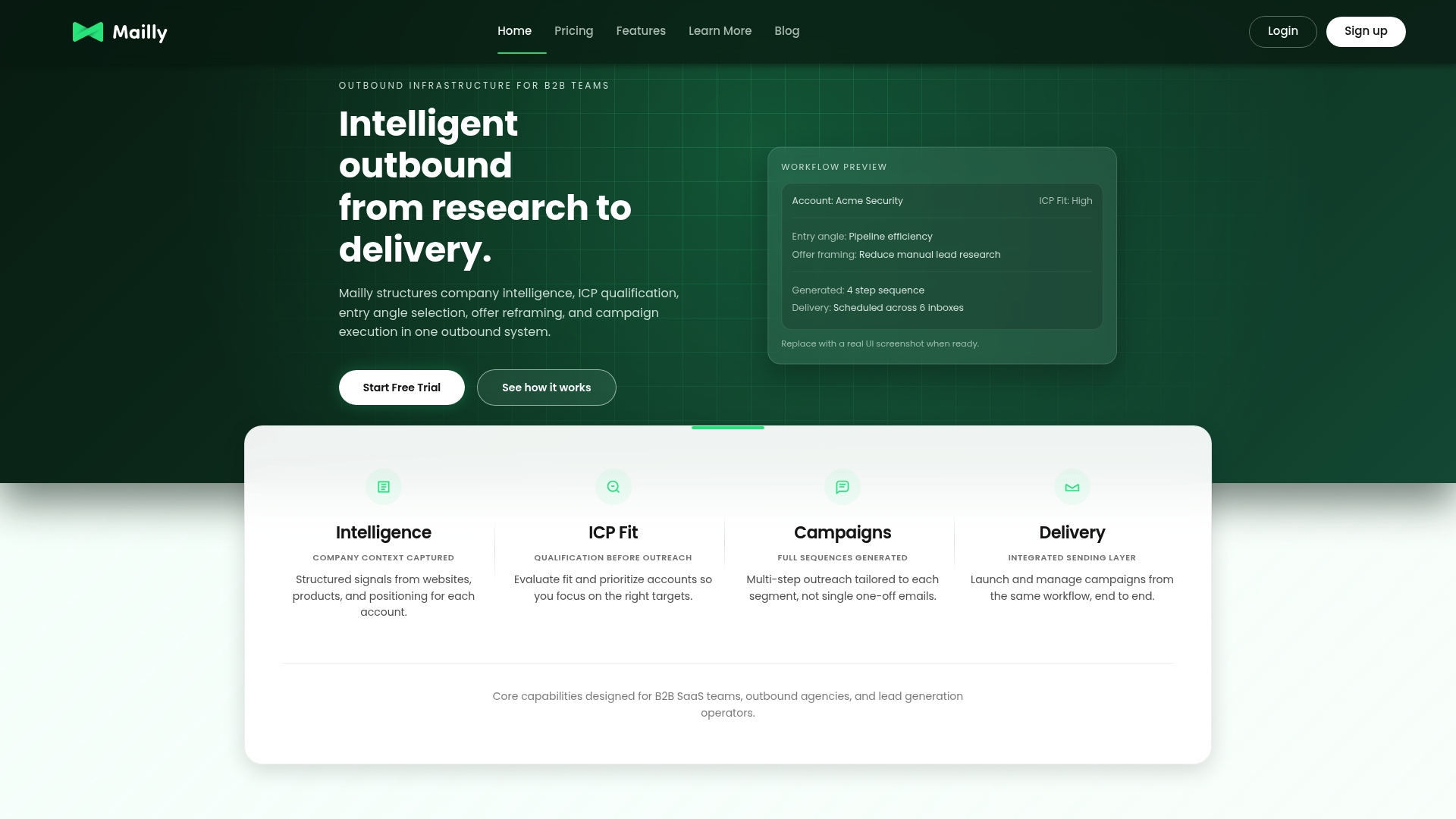
Ready to stop guessing and start engaging with precision? Explore how Mailly’s AI-powered outbound strategy engine can revolutionize your email campaigns today. Discover more about the power of personalization and behavioral sequencing for your B2B outreach. Take the first step toward higher response and conversion rates by visiting Mailly now.
Frequently Asked Questions
What is email campaign psychology?
Email campaign psychology refers to the strategic use of psychological principles in digital communication to influence how recipients engage with targeted messages. It focuses on understanding behavioral triggers and cognitive mechanisms to enhance engagement and response rates.
How can urgency be used in email marketing campaigns?
Urgency creates a sense of immediate action, prompting recipients to respond quickly. By conveying time-sensitive offers or deadlines, marketers can trigger the fear of missing out (FOMO), leading to increased response rates.
Why is personalization important in email outreach?
Personalization tailors content to the individual recipient’s context and preferences, making messages feel immediate and relevant. This can enhance engagement, improve conversion rates, and demonstrate a deeper understanding of the recipient’s business challenges.
What common pitfalls should be avoided in psychology-driven email campaigns?
Marketers should avoid over-personalization that breaches privacy, urgency fatigue from excessive time pressures, cognitive overload from complex messaging, and generic psychological manipulation. Each of these can negatively impact campaign effectiveness and recipient trust.
