

Cold outreach isn’t dying. It’s evolving. The difference between campaigns that get ignored and those that drive real conversations comes down to one thing: data. In 2026, smart B2B teams are using firmographics, technographics, and behavioral insights to personalize at scale, improve deliverability, and turn cold prospects into qualified conversations. Here’s how you can do the same.
Table of Contents
- Why Data Transforms Cold Outreach Effectiveness
- Segmenting Your Audience With Firmographics, Technographics, And Behavior
- Using Data To Optimize Deliverability And Avoid Common Pitfalls
- Implementing A Data-Driven Cold Outreach Strategy: Practical Steps
- Discover Mailly’s AI-Powered Cold Outreach Platform
- FAQ
Key takeaways
| Point | Details |
|---|---|
| Data-driven personalization delivers results | Personalized campaigns achieve 20-30% higher open rates and 10-15% better reply rates than generic outreach. |
| Segmentation creates relevance | Combining firmographics, technographics, and behavioral data boosts click-through rates by up to 2x. |
| Deliverability depends on data hygiene | Email validation and sender reputation monitoring ensure your messages reach inboxes, not spam folders. |
| Avoid superficial personalization | Over-personalizing with irrelevant details can feel intrusive and damage trust. |
| Focus on engagement, not vanity metrics | Reply rates and conversions matter more than open rates for measuring true campaign success. |
Why data transforms cold outreach effectiveness
Generic cold outreach is a numbers game with terrible odds. Spray-and-pray campaigns generate low engagement, poor conversion rates, and wasted resources. The alternative is using data to personalize and target your messaging strategically.
Data-driven cold outreach significantly improves performance. When you leverage CRM data, intent signals, and third-party enrichment tools, you create campaigns that speak directly to prospects’ needs and challenges. Case studies consistently show 20-30% higher open rates and 10-15% better reply rates compared to generic campaigns. Conversion rates can jump by 5-10% when you apply data-driven targeting and personalization tactics.
What makes data so powerful? It lets you move beyond demographic basics to understand what prospects actually care about right now. You can identify companies showing buying signals, prioritize accounts with the highest fit, and craft messages that address real pain points instead of guessing.
Here are the core benefits of data-driven cold outreach:
- Higher open rates through relevant subject lines and sender context
- Better reply rates from personalized, value-focused messaging
- Improved conversion rates by targeting prospects with genuine need and fit
- Stronger targeting by focusing resources on high-potential accounts
- More relevant messaging that speaks to specific business challenges
The shift from volume to precision is what separates modern cold outreach from outdated tactics. When you know who you’re talking to and why they should care, every email becomes an opportunity instead of an interruption.
Segmenting your audience with firmographics, technographics, and behavior
Effective segmentation starts with understanding the different data layers available to you. Firmographics tell you what kind of company you’re targeting: industry, employee count, revenue, location. Technographics reveal their tech stack: what tools they use, what integrations they need, what gaps exist in their current setup. Behavioral data shows intent: website visits, content downloads, recent funding announcements, job postings.
Combining these layers creates hyper-targeted segments that dramatically improve relevance. A SaaS company selling marketing automation might segment by industry (B2B tech), size (50-200 employees), tech stack (using HubSpot but missing key integrations), and behavior (recently posted for a marketing ops role). This precision makes personalization meaningful instead of superficial.
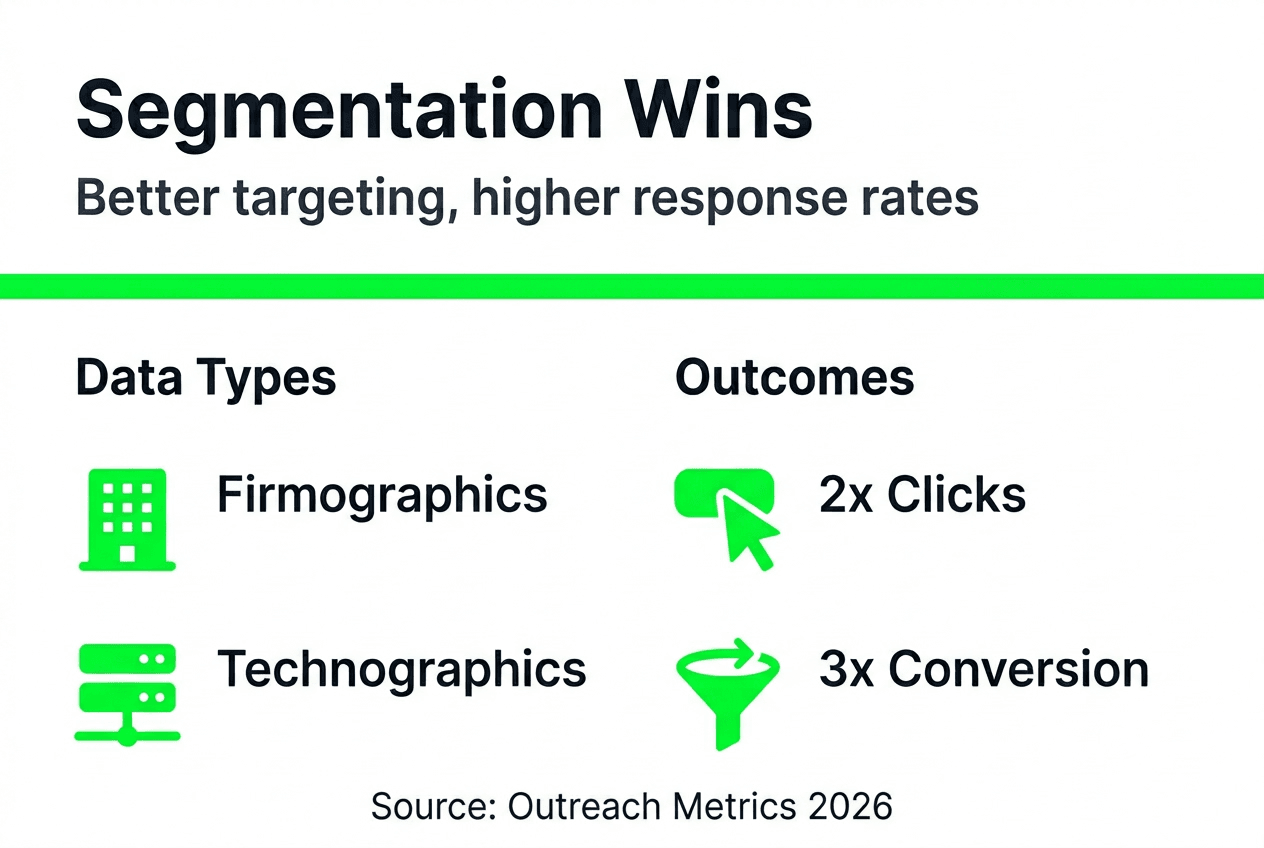
Segmented campaigns achieve up to 2x higher click-through rates and 3x higher conversion rates compared to non-segmented approaches. The difference comes from sending the right message to the right person at the right time.
| Segmentation Type | Primary Use Case | Impact on Metrics |
|---|---|---|
| Firmographics | Initial targeting and qualification | Improves list quality, reduces bounce rates |
| Technographics | Product fit and integration messaging | Increases relevance, boosts reply rates |
| Behavioral data | Timing and personalization triggers | Drives engagement, improves conversion rates |
| Combined layers | Hyper-targeted micro-segments | Maximizes all metrics through precision |
Pro Tip: Start with broad segments based on firmographics, then layer in technographic and behavioral data to create 3-5 micro-segments. This balance keeps campaigns manageable while maintaining strong personalization without overwhelming your team or prospects with excessive granularity.
The key is avoiding segments so narrow they become impractical or so broad they lose relevance. Test different combinations and measure which data points correlate most strongly with engagement and conversion in your specific market. Follow proven best practices to refine your approach over time.
Using data to optimize deliverability and avoid common pitfalls
Even the most personalized message fails if it never reaches the inbox. Deliverability challenges like spam filters, invalid email addresses, and poor sender reputation can tank your open rates before prospects ever see your subject line.

Data ensures emails reach inboxes by validating addresses, monitoring sender reputation, and optimizing sending patterns. Email validation services check for syntax errors, disposable addresses, and inactive accounts before you send. Sender score monitoring tracks your domain and IP reputation across major email providers. Timing optimization uses engagement data to send when prospects are most likely to open and respond.
Here are data-driven tactics to improve deliverability:
- Validate email lists regularly to remove bounces and invalid addresses
- Monitor sender scores and authentication protocols like SPF, DKIM, and DMARC
- Warm up new domains gradually instead of sending high volumes immediately
- Optimize send times based on recipient time zones and engagement patterns
- Segment by engagement level to avoid sending to cold contacts who hurt reputation
Pro Tip: Stop obsessing over open rates. They’re notoriously unreliable due to privacy features and image blocking. Focus on reply rates, meeting bookings, and pipeline generation as your true north metrics for campaign success.
A common pitfall is over-personalizing with irrelevant or intrusive data. Mentioning a prospect’s college or recent LinkedIn post can feel creepy if it doesn’t connect to your value proposition. Personalization should demonstrate understanding, not surveillance.
“Deliverability isn’t just a technical issue. It’s the foundation of your entire outreach strategy. Without it, your targeting and personalization efforts are invisible.”
Another mistake is ignoring engagement signals. If someone hasn’t opened your last five emails, continuing to send creates negative signals that harm your sender reputation. Use data to identify disengaged contacts and remove them from active sequences. Review why cold outreach fails to understand what drives these issues and apply modern best practices to avoid them.
Implementing a data-driven cold outreach strategy: practical steps
Transforming your cold outreach with data doesn’t require a complete overhaul overnight. Start with this practical framework:
- Define your ideal customer profile using firmographic and technographic criteria that indicate high fit and need
- Gather data from CRM systems, intent providers, technographic tools, and behavioral tracking platforms
- Segment your audience into 3-5 targeted groups based on multiple data layers for relevance without over-complication
- Craft personalized messages that reference specific data points and address segment-specific challenges authentically
- Test subject lines, messaging angles, and send times to identify what resonates with each segment
- Measure engagement and conversion metrics to optimize campaigns continuously based on real performance data
- Refine your ICP and segments as you learn which characteristics correlate most strongly with conversion
Leverage data to identify ideal customer profiles, segment audiences, personalize messaging, and optimize campaigns for measurably better results over time.
| Data Source | Primary Role | Example Use Case |
|---|---|---|
| CRM data | Historical performance and existing relationships | Identify lookalike accounts based on best customers |
| Intent data | Buying signals and timing | Prioritize prospects actively researching solutions |
| Technographic data | Tech stack and integration needs | Tailor messaging to current tools and gaps |
| Behavioral data | Engagement and interest level | Adjust follow-up cadence based on response patterns |
Continuous measurement is critical. Track which data points drive the strongest engagement and conversion, then double down on those insights. What works for one segment may not work for another, so maintain separate metrics for each group.
Integrating AI and automation tools helps you scale personalization without sacrificing relevance. Modern platforms can analyze prospect data, generate customized messaging, and optimize send times automatically. Learn how to master the cold email sequence process and explore AI strategies for B2B success to stay ahead in 2026.
Avoid the temptation to personalize everything. Focus on data points that genuinely demonstrate understanding and create value for the prospect. Mentioning their company name and a relevant challenge matters more than referencing their favorite sports team.
Discover Mailly’s AI-powered cold outreach platform
Implementing these data-driven strategies manually takes significant time and expertise. Mailly automates the heavy lifting while maintaining the strategic precision that drives results.
Mailly’s AI engine starts with deep contextual research, analyzing company positioning, product architecture, monetization models, hiring signals, and competitive landscape. This research identifies real business bottlenecks and evaluates ICP fit before any message gets written. The platform then builds psychologically sequenced campaigns designed for relevance, not volume.
Key benefits include:
- Deep B2B research capabilities that uncover genuine pain points and opportunities
- AI-powered personalization that feels intentional and contextually relevant
- Deliverability optimization built into every campaign for maximum inbox placement
- Seamless CRM integration to leverage your existing data and workflows
The result is outreach that feels strategically positioned and valuable instead of templated and random. Explore how Mailly transforms cold outreach for B2B teams ready to move beyond generic campaigns.
FAQ
What types of data improve cold outreach effectiveness?
Firmographic data like industry and company size helps with initial targeting. Technographic data revealing tech stack and tools enables product fit messaging. Behavioral data including website visits and content engagement shows buying intent and optimal timing. Combining all three creates the most effective personalization and relevance.
How often should I update my data for outreach?
Update contact-level data like email addresses and job titles monthly to avoid bounces and outdated information. Refresh firmographic and technographic data quarterly as companies grow and change tools. Monitor behavioral and intent data continuously or weekly to catch buying signals when they’re fresh and actionable.
Can too much personalization hurt response rates?
Yes, over-personalization using irrelevant details feels intrusive and creepy. Mentioning personal information that doesn’t connect to your value proposition signals you’re researching prospects instead of understanding their business challenges. Focus personalization on demonstrating knowledge of their company’s needs and how you can help solve specific problems.
What metrics matter most beyond open rates?
Reply rates show genuine engagement and interest in conversation. Meeting booking rates indicate qualified interest worth sales time. Pipeline contribution and revenue influenced measure actual business impact. These metrics reveal whether your outreach creates valuable opportunities instead of just opens that lead nowhere.
How does data help improve email deliverability?
Data validates email addresses before sending to reduce bounces that harm sender reputation. Engagement tracking identifies inactive contacts to remove from sequences. Send-time optimization uses recipient behavior patterns to improve open likelihood. Sender score monitoring alerts you to reputation issues before they tank deliverability across your entire domain.
